An Iban longhouse is a village under one roof: a single building raised on stilts, sometimes hundreds of metres long, with a shared covered veranda — the ruai — running the entire length, and individual family apartments, or bilik, opening off it. Life happens on the ruai: children play, elders talk, harvests are dried, and guests are welcomed with tuak the moment they arrive.
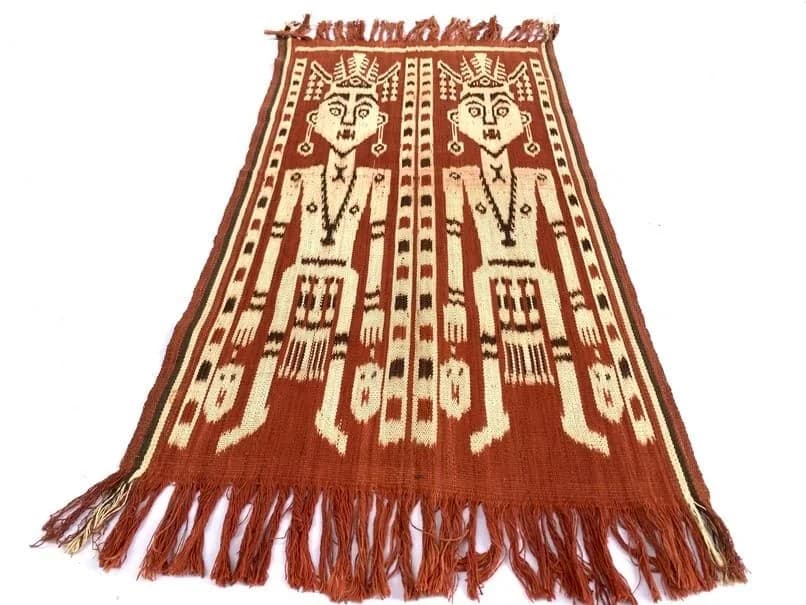
Pua kumbu, the Iban ceremonial ikat textile, is woven from cotton thread dyed using a resist technique before it ever touches the loom, so the pattern is locked into the yarn itself long before weaving begins. Traditionally, the natural dyeing process — known as ngar — was treated as a ritual act, undertaken by senior weavers with specific taboos and blessings, since a pua kumbu wasn't just cloth but a spiritually significant object used to mark births, harvests and the return of a warrior.
Motifs are passed down through families and said to come to a weaver in dreams, encoding ancestral stories, spirits and natural forms into geometric patterns of rust, indigo and ecru. Genuine hand-woven pua kumbu can take months to complete, and today it's as often framed as artwork as it is used in ceremony — a textile that has outlasted the practices that once surrounded it.