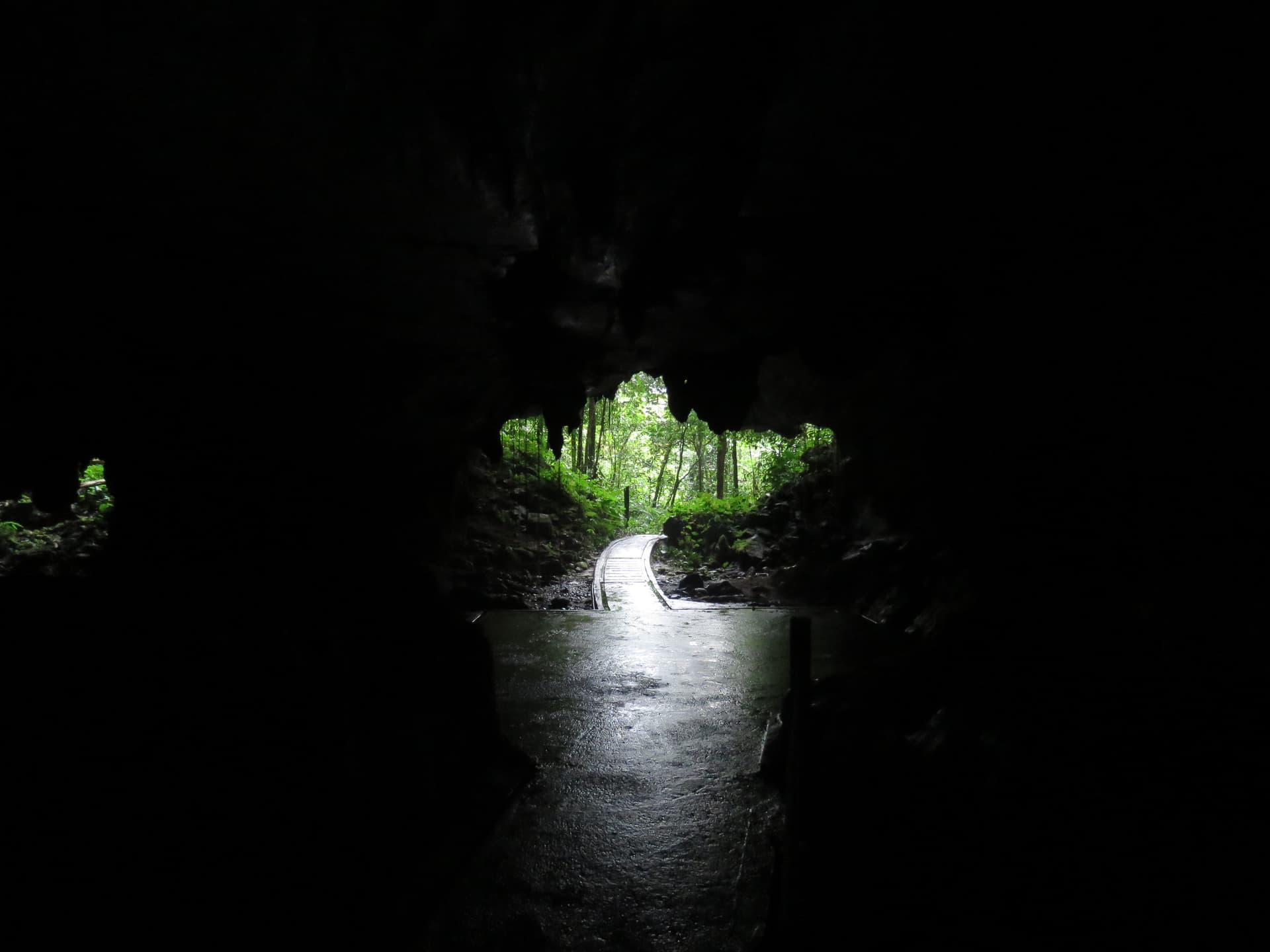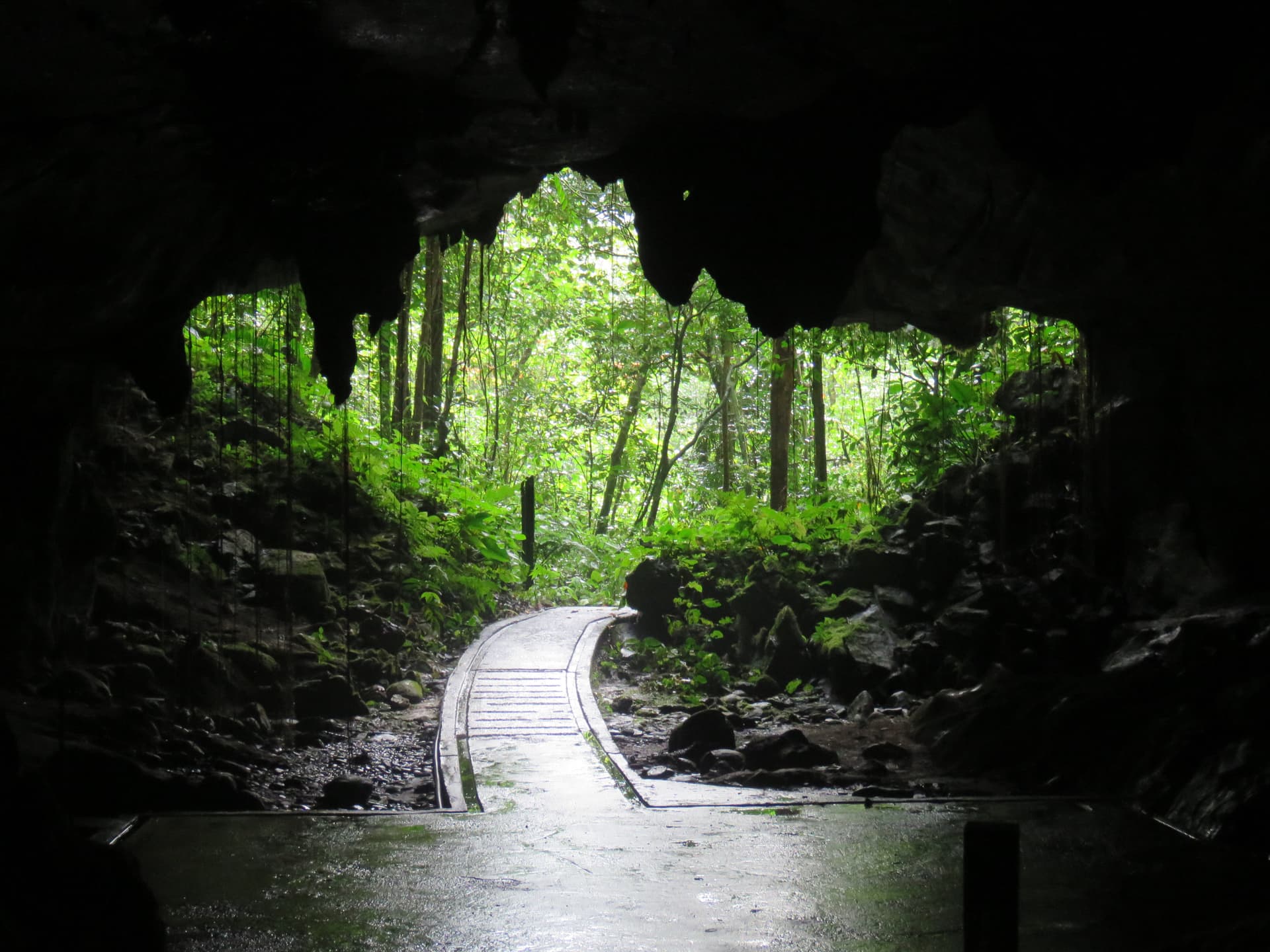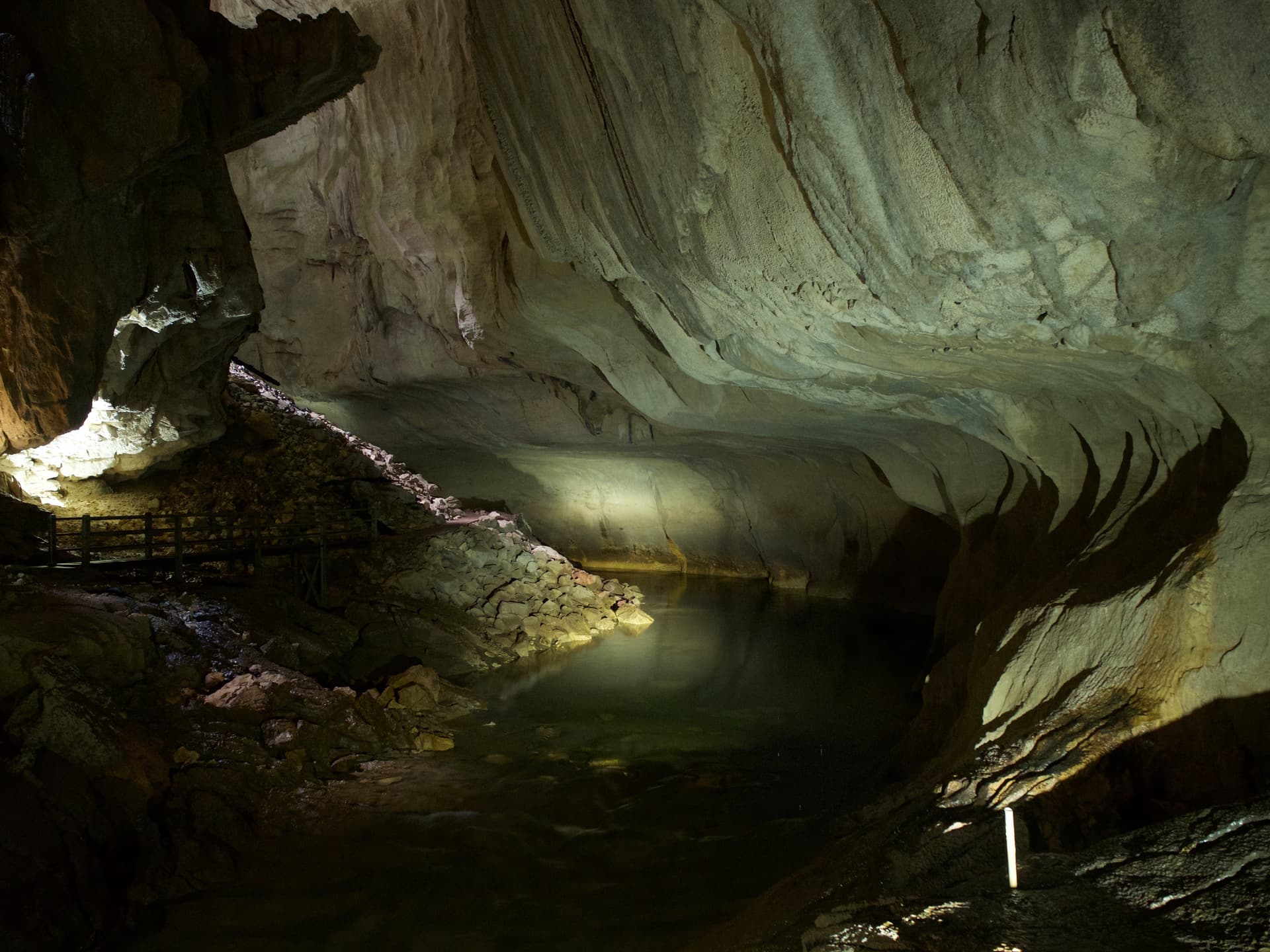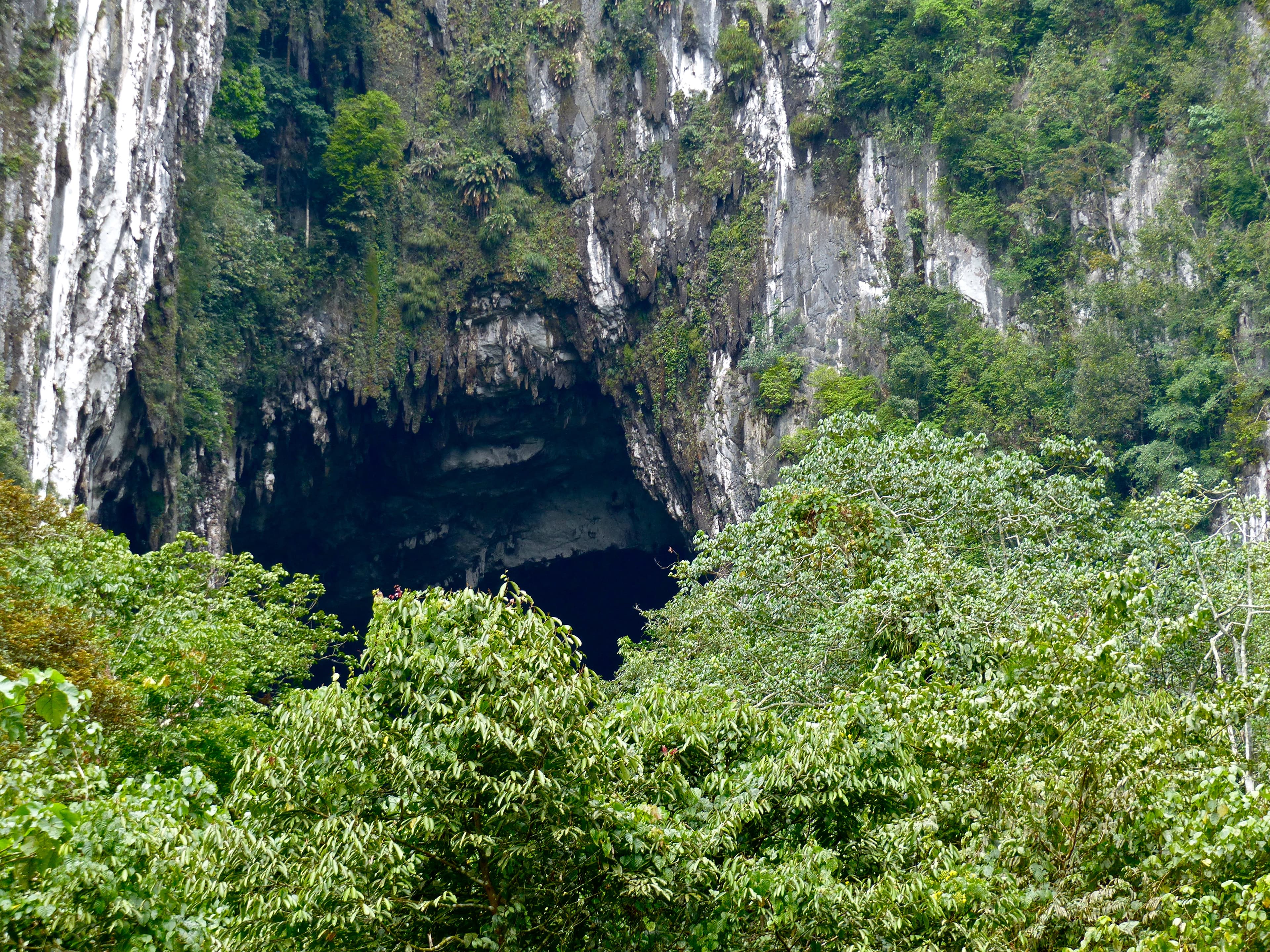
Gunung Mulu National Park earned its UNESCO World Heritage status largely underground, and its two most-visited 'show caves' — Deer Cave and Clearwater Cave — are the reason most visitors first hear the word Mulu at all. Both are set up with boardwalks, lighting where needed, and mandatory guides, which means neither requires any caving experience or equipment beyond decent footwear — but both still manage to feel genuinely enormous in a way photographs rarely capture.
Deer Cave is reached by a well-maintained plank walkway roughly three kilometres from Park Headquarters, winding through lowland rainforest before opening into a passage so large it ranks among the biggest cave passages on the planet by volume — big enough that daylight barely reaches the cave floor at its widest points. Millions of wrinkle-lipped bats roost in its ceiling, and the cave's guano-rich floor supports its own specialised ecosystem of insects, cave crickets and the creatures that hunt them, all part of the reason Deer Cave functions as a genuine research site as much as a tourist stop.
A short side trail off the main Deer Cave walkway leads to a lookout over the 'Garden of Eden' — a huge collapsed sinkhole flooded with sunlight, where a pocket of dense rainforest has grown up inside what used to be cave roof. It adds perhaps half an hour to a Deer Cave visit and is easy to skip if you're short on time, but it's one of the more striking sights in the park precisely because it's rainforest growing where, structurally, there shouldn't be any at all.
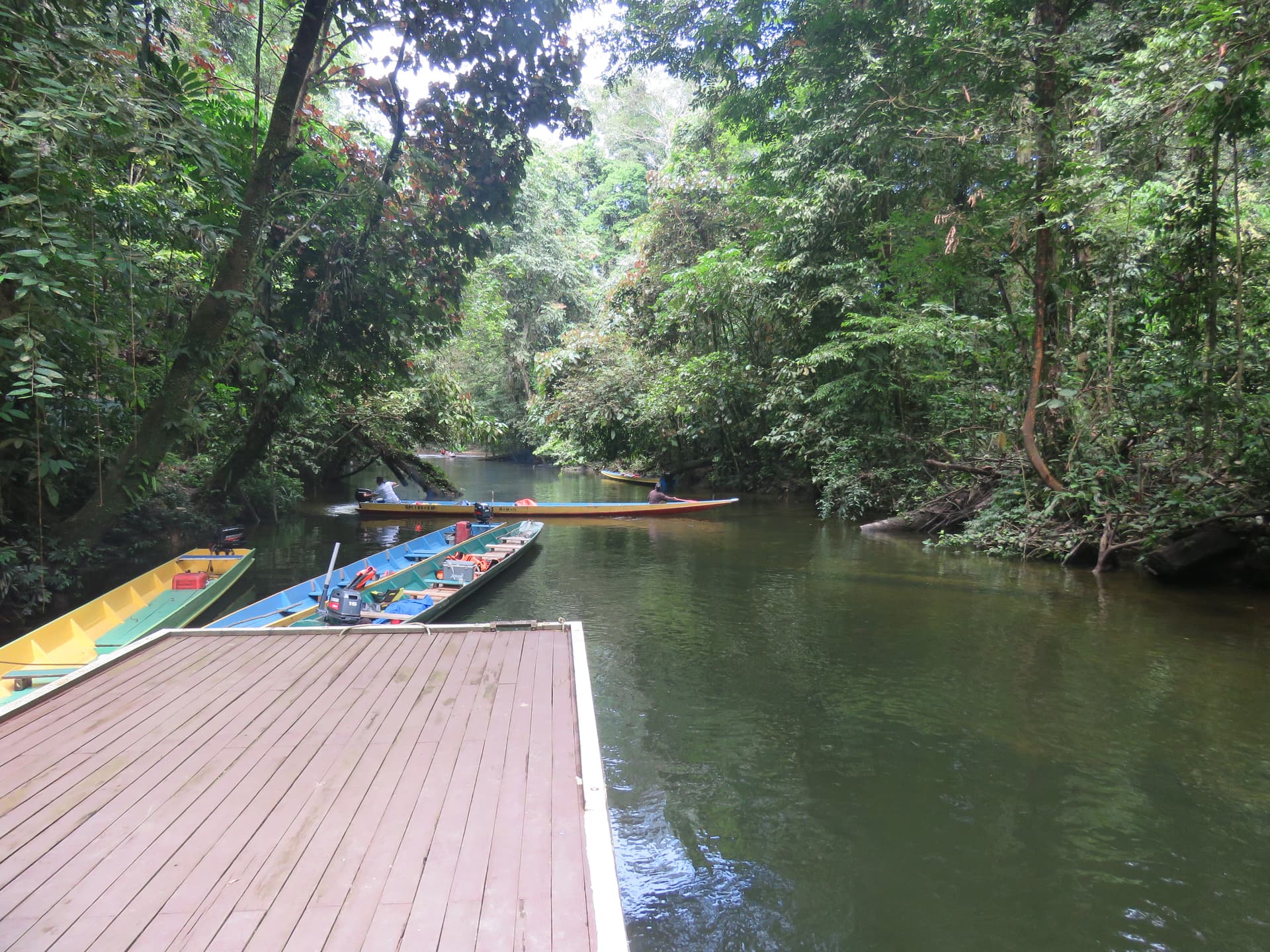
Clearwater Cave sits on the opposite side of the river system and is reached by longboat rather than on foot — a scenic ride up the Melinau River that's part of the experience in its own right. The cave forms part of one of the longest connected cave systems anywhere in the world, threading for many kilometres through the limestone of Gunung Api, though visitors only walk a fraction of it on the guided boardwalk route. Near the cave mouth, an underground river opens into a cool, clear pool that's open for swimming — reason enough on its own to bring a change of clothes.
Both show caves are part of the same enormous limestone massif that holds the Sarawak Chamber, discovered in 1980 and still recognised as the largest known cave chamber on Earth by floor area — reportedly large enough to fit dozens of jumbo jets inside. It isn't open to general visitors and requires a serious caving expedition to reach, but its presence in the same mountain range gives some sense of scale for just how much cave system lies beneath Mulu's rainforest, most of it still unexplored.
Visiting either show cave requires a licensed park guide, arranged at Park Headquarters, and both are typically done as half-day trips that can be combined into one full day if timed well. Sturdy, grippy footwear matters more than technical gear — boardwalks can be slick with cave humidity — and a headlamp or torch is worth carrying even though the main routes are lit, since Mulu's power supply, like most things this far into the interior, isn't always perfectly reliable.