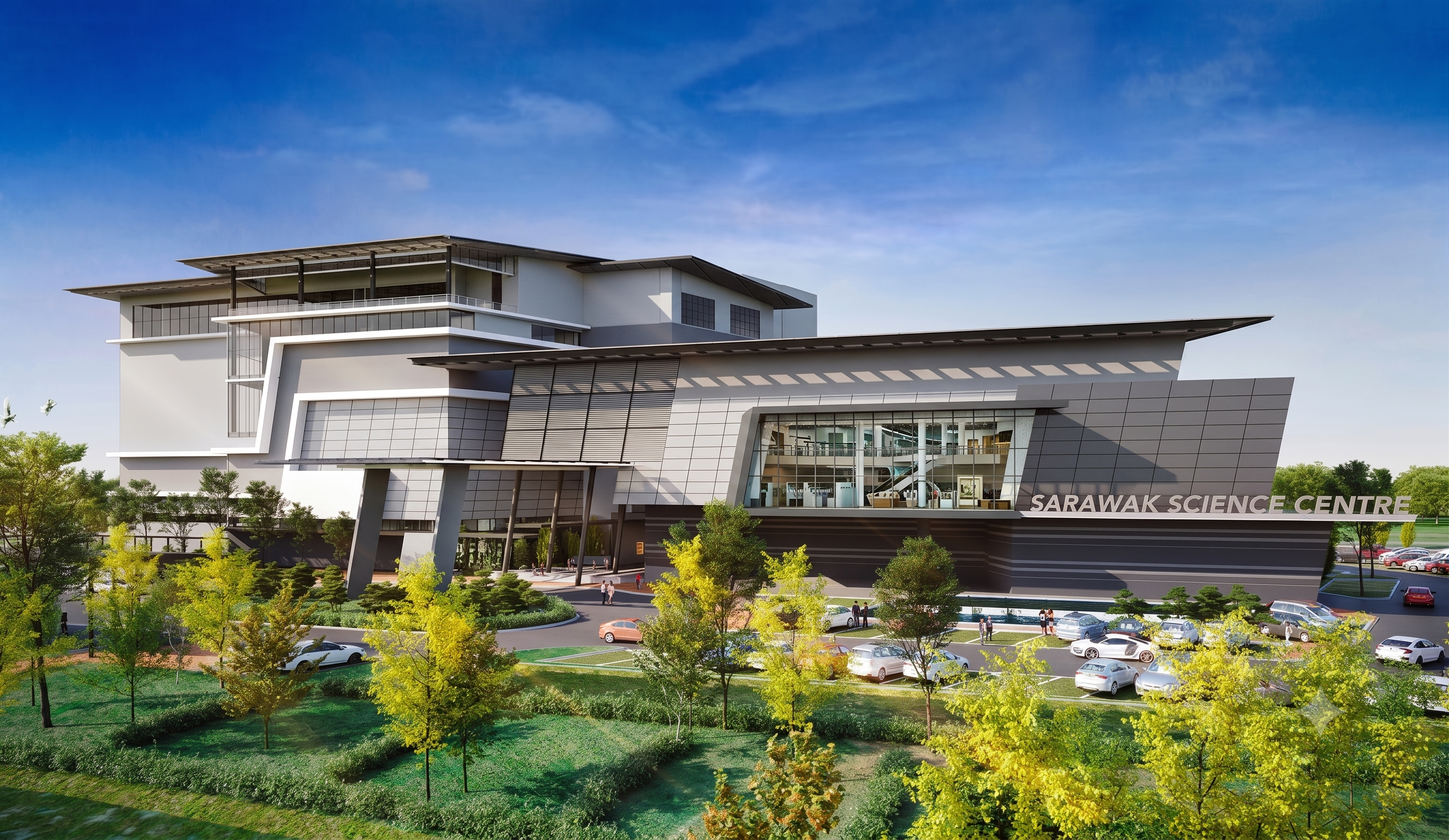
Kuching has a brand-new landmark, and it isn't another mall or hotel: the Sarawak Science Centre, known as SSCiEX, opened its doors for the first time on 29 July 2026, giving the city its biggest dedicated science attraction yet. We visited within days of opening, and the photos and video through this article are from that trip. Built on a 10.97-acre site at Jalan Stadium in Petra Jaya, directly across from Pustaka Negeri Sarawak, the five-storey building packs in 22 thematic galleries and more than 400 hands-on exhibits — genuinely one of the largest science centres anywhere in Malaysia, and easily the biggest addition to family days out in Kuching in years.
SSCiEX was officially inaugurated by Sarawak Premier Datuk Patinggi Tan Sri Abang Johari Tun Openg on 29 July 2026, with the centre opening to the general public from 4 August. What's open for now is Phase 1 — the Ground Floor and Level 1 galleries — with Phase 2, covering Levels 2 and 3, still to follow. Even at half its eventual size, Phase 1 alone was a genuinely full afternoon for us, so there's no need to wait for the rest of the building before planning a visit.
The centrepiece is the Dinosaur Gallery, and it's the one gallery you can hear before you see — walk in under its own dinosaur-head signage and a full sauropod skeleton greets you first, with an animatronic Tyrannosaurus rex and what's billed as Malaysia's first Spinosauridae exhibit further in. The Spinosaurus animatronic in particular, all sail-backed ridge and slow-moving jaws, had a crowd of kids and parents angling for photos the entire time we were there — see the video above for exactly what that looks like in person.
A few galleries over, the hands-on stations get more specific than 'science for kids' branding usually promises. One table-sized model labelled 'Hydroelectric Power' lets visitors turn a crank to spin a small turbine and watch a bulb light up, walking through the same basic principle behind Sarawak's own hydroelectric dams at Bakun and Batang Ai. Nearby, a bright yellow forces exhibit built around an oversized coiled spring demonstrates tension and elasticity at a scale you can actually see move, and a spinning colour-mixing wheel shows how the eye blends rotating segments into a single blended colour — simple ideas that land better watched in person than read off a textbook diagram, which is really the whole premise of the place.
The Waterplay zone was one of the busiest corners of Phase 1 on the day we visited: a bright green, hands-on table where kids can trigger a small vortex in a clear water tank and watch fluid dynamics play out in real time, no safety briefing required. It sits alongside the centre's Bubble exhibit, a mirror maze and the Fire Tornado demonstration — already one of SSCiEX's most talked-about moments online — while a giant globe of the Earth hangs suspended over one of the atriums and a dedicated Sarawak Delta Geopark gallery and Borneo biodiversity gallery tie the science back to the state's own rainforest and river systems rather than treating it as an abstract, imported subject. Outside, the grounds hold their own exhibits too — a Kinetic Wind Sculpture, an Azimuthal Sundial and an Analemmatic Sundial — proof the science doesn't stop at the front doors.
Even on a regular afternoon in its first week open, SSCiEX's ground floor was genuinely packed — steady streams of families moving gallery to gallery, which tracks with how much local anticipation had built around this project since it broke ground. If you're planning around crowd levels, expect opening weeks and school holidays to be the busiest stretch by far.
Beyond the galleries, SSCiEX is built with schools specifically in mind: five specialised laboratories covering chemistry, DNA, and food and nutrition science, plus two Maker Spaces for student projects, an auditorium seating 150 to 200, and a separate 98-seat mini auditorium for smaller sessions and daily science theatre shows. The whole facility exists in service of Sarawak's Post-COVID-19 Development Strategy (PCDS 2030), which set a target of 60% STEM enrolment among students by 2030 — SSCiEX's own framing calls it the '93% Solution,' a reference to how much of a student's time is actually spent outside the classroom, and therefore how much potential there is in a place designed to make that time count. The centre's strategic master plan was developed with Singapore's own Science Centre, which shows in how deliberately each gallery is built around hands-on discovery rather than static displays.
For school groups travelling in from outside Kuching, SSCiEX runs an on-site hostel with beds for 150 students, meaning a visit can be built into an overnight excursion rather than squeezed into a single day trip. Group and school visits are bookable directly through the centre's official website, which is worth doing well ahead of time regardless of group size, since the venue is brand new and demand in these opening months is expected to be high.
For everyone else, the practical details are refreshingly simple. SSCiEX is open Tuesday to Sunday, 9am to 4.30pm, and closed on Mondays. Admission is free for all visitors until 31 December 2026 — full ticket pricing for adults, children and seniors has yet to be finalised, so the current window is, quite literally, the cheapest this attraction will ever be. Parking is available near the main entrance, and ride-hailing services have a designated drop-off point at the front of the building, making it an easy add-on to any day in Kuching.
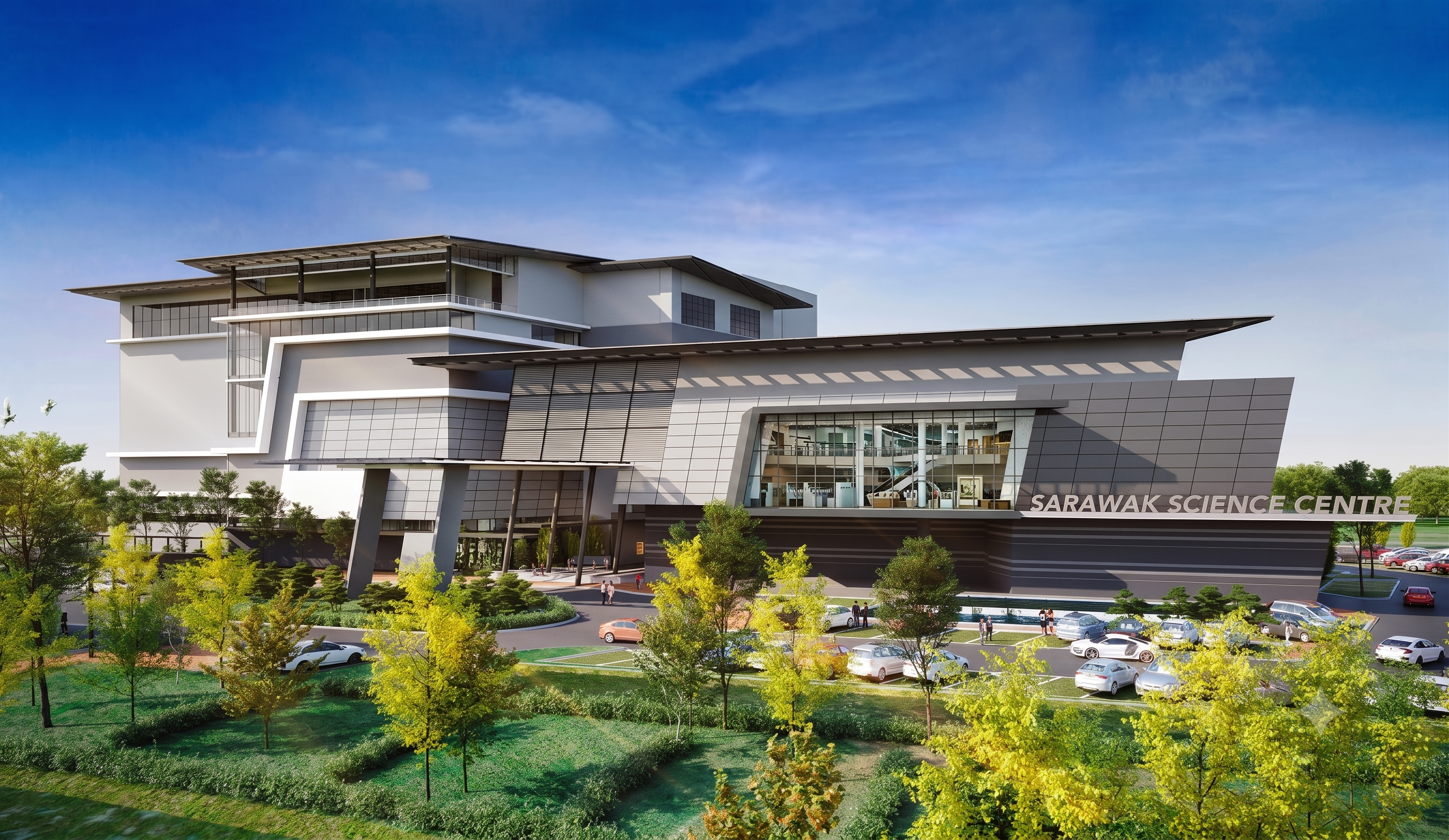
We're also sharing our own high-resolution shot of the building itself, above — the angular glass-and-steel exterior with the Sarawak Science Centre signage lit up across its facade. Download the full-resolution original here if you want a clean copy for your own trip planning, write-up or presentation.
Pair a visit with the Borneo Cultures Museum or the Kuching Cat Museum for a full day of Kuching's newer attractions, or keep it in your back pocket as a rainy-day plan when an outdoor itinerary isn't in the cards. Either way, with admission free through the rest of 2026, there's very little reason not to see Sarawak's newest landmark for yourself while it's still brand new.