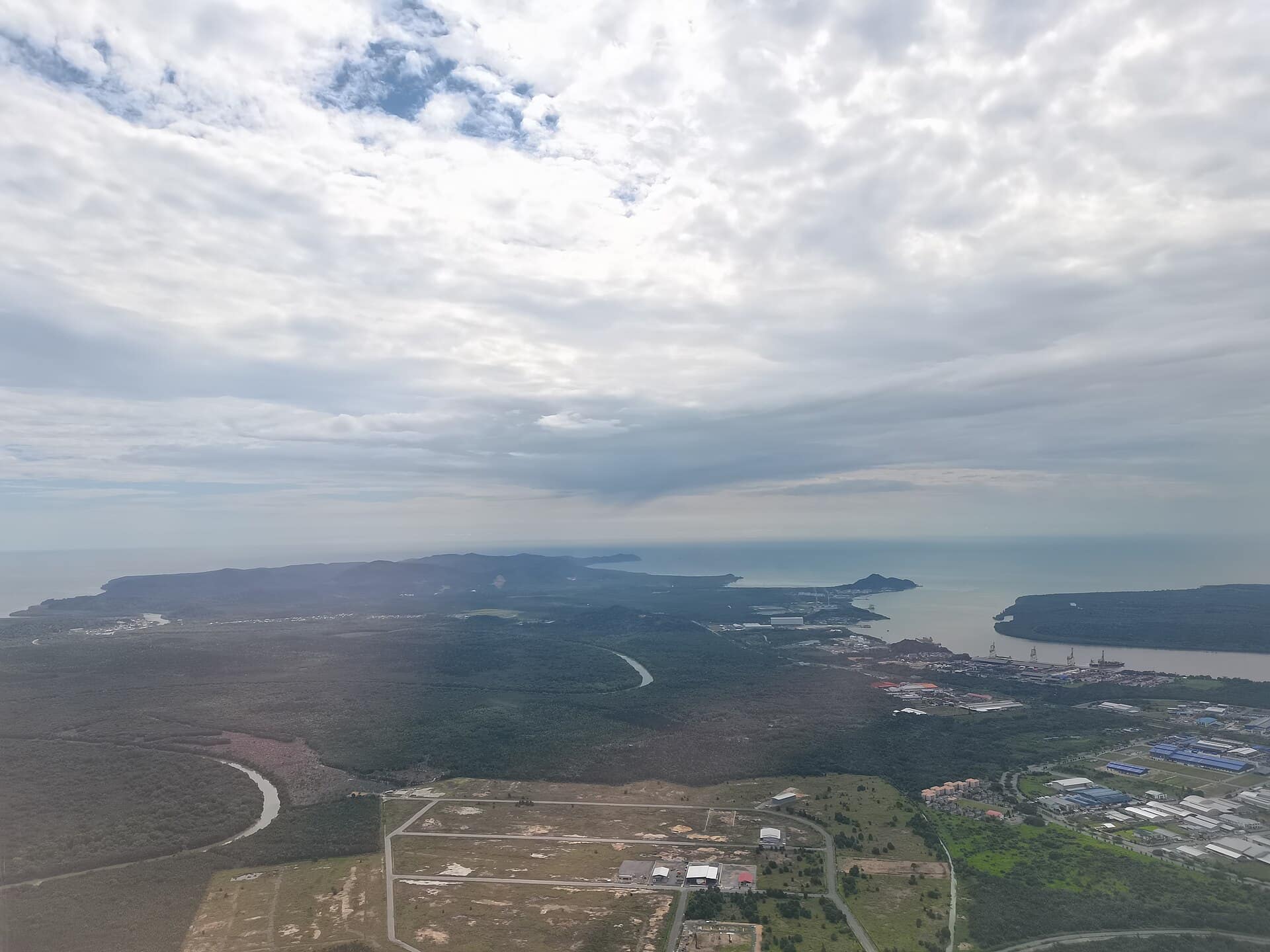
From the second quarter of 2026, Sarawak's ports are due to answer to a single state regulator instead of a separate board at each port. The Sarawak Ports Authority takes over the regulatory work the existing port boards do now, and those boards are then to be converted into companies wholly owned by the state. The law behind it was passed more than two years before it takes effect.
How Sarawak's ports are organised today
The state's own portal lists Kuching, Sibu, Bintulu and Miri as Sarawak's main ports, and describes them all as equipped for general and bulk cargo — dry, liquid and gaseous alike. The important line in that description is a jurisdictional one: every one of the state's ports is run as a State Port Authority except Bintulu, which falls under the federal government.
That split is the reason a consolidation is not a simple administrative tidy-up. A board at Kuching, another at Sibu and another at Miri each regulate their own port under state law, while Bintulu — the deep-water bulk terminal that handles the state's liquefied natural gas trade — sits outside that structure entirely.
What the new authority replaces
The Sarawak Ports Authority is intended to be the single regulatory body for all ports in the state, assuming the regulatory responsibilities the individual port boards hold now. Bernama reported in November 2025 that it is expected to begin operations in the second quarter of 2026.
The enabling law was not new even then. The state assembly passed the bill establishing the central body on 7 May 2024, and the transfer of regulatory powers runs under the resulting Sarawak Ports Authority Ordinance 2024. A task force has been formed to build the administrative and management framework the new authority will run on.
The three phases, and what each one actually does
Datuk Majang Renggi, Deputy Minister for Infrastructure and Port Development, set out a consolidation in three stages rather than a single handover:
- Interim. Regulatory authority moves from the existing port boards to the new authority under the Sarawak Ports Authority Ordinance 2024. This is the stage the second quarter of 2026 refers to.
- Corporatisation. The statutory port boards are converted into wholly state-owned companies under the Companies Act. The stated reasons are efficiency, financial strength and accountability — the change moves a port from a statutory body answering under public administration rules to a company with accounts of its own.
- Privatisation. A later stage preparing for private sector involvement. No date has been attached to it in the material reviewed here.
The sequence matters for anyone reading the 2026 date as the end of the process. It is the beginning of one: regulation changes hands first, ownership structure second, and private participation is a question left open.
What these sources do not settle
Two things are worth stating plainly rather than assuming. The first is Bintulu. The state portal places Bintulu Port under federal control, while the new body is described as the single regulator for all ports in Sarawak. None of the official material read for this article explains how a federally held port is brought into a state regulatory structure, or whether it is.
The second is what corporatisation means for the people who work at the port boards. The phases describe a change of legal form; they do not, in the material reviewed, set out terms for existing staff. Neither gap is a contradiction in the sources — both are simply detail that has not been published yet, and a task force still building the framework is consistent with that.
The ministry that owns the change
Ports sit with the Ministry of Infrastructure and Port Development, and its own history page shows how recently they became a named priority. The ministry began in 1963, after Sarawak entered Malaysia on 16 September that year, as the Ministry of Communication and Works under its first minister, Encik Abdul Taib bin Mahmud. It was renamed the Ministry of Works and Special Functions in 1984, the Ministry of Infrastructure Development in 1985, the Ministry of Infrastructure Development and Communications in 1996, and the Ministry of Infrastructure Development and Transportation in May 2016.
Ports entered the title only on 22 August 2019. The ministry's account of its own founding frames the original 1963 remit as overseeing infrastructure and communication facilities across the state — a brief broad enough to contain ports without naming them. Read against that timeline, the 2024 ordinance and the 2026 handover are the second half of a change that started with the 2019 renaming: ports moving from one line item in a general infrastructure portfolio to a sector with a dedicated regulator.
Sources
- BERNAMA - Sarawak Ports Authority To Begin Operations In Q2 2026 — Bernama
- The Official Portal of the Sarawak Government — Sarawak Government
- History - Ministry of Infrastructure and Port Development Sarawak — Sarawak Government
- Our Ministry - Ministry of Infrastructure and Port Development Sarawak — Sarawak Government