Gawai Dayak
A time to give thanks, return home and celebrate the ties that bring communities together.
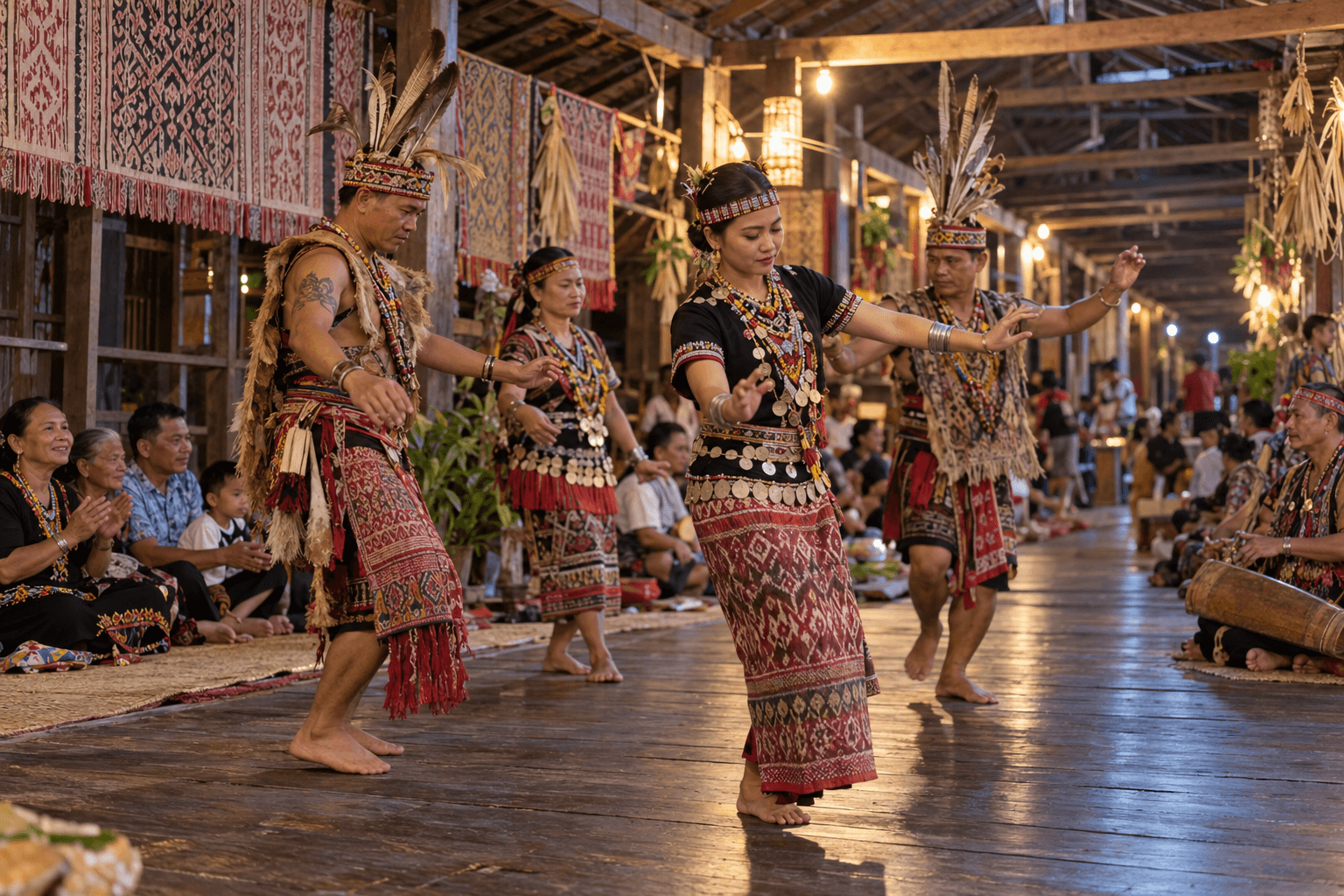
A celebration with a sense of place.
Gawai Dayak is celebrated on 1 and 2 June, following preparations on 31 May. It marks the close of the rice-harvest season and creates space for thanksgiving, reunion and hopes for the year ahead. Dayak is a broad identity: Iban, Bidayuh and other communities keep related but distinct customs, so no single programme represents every household.
In many Iban longhouses, the communal ruai becomes the centre of the celebration. Visitors may encounter miring offerings, ngajat dancing, gong and drum music, storytelling and rounds of food. Ngabang describes the practice of visiting during the festive period, but it is hospitality rather than a general invitation to enter any longhouse.
Food carries memory. Families prepare dishes such as glutinous rice cooked in bamboo, chicken with tapioca leaves, cakes and tuak rice wine well before the holiday. Guests should feel comfortable declining alcohol politely and should always wait for the host’s cue around ritual or ceremonial moments.
Public programmes in Kuching and other towns can be a good introduction. A community or longhouse visit offers a more personal experience when arranged through a host, homestay or responsible local guide.
What to look forward to
- Community celebrations and family reunions
- Food, music and traditions shared by hosts
- Public programmes where advertised locally
- Ngajat dance, oral traditions and longhouse music
- Seasonal dishes prepared for visiting family and friends
Make the most of your visit
- Arrange community visits in advance; an open-house invitation is not automatic.
- Ask before taking photographs or joining a ceremony.
- Check transport and accommodation early around the holiday.
- Dress neatly, remove shoes when asked and bring a small gift for your hosts.
- Do not treat ceremonial dress, offerings or sacred objects as props.
Six scenes to set the mood.
The lead scene was generated for this guide. Archive photographs add cultural and regional context and may not depict this event or edition.
A Gawai evening in the longhouse ruai · AI-generated editorial image
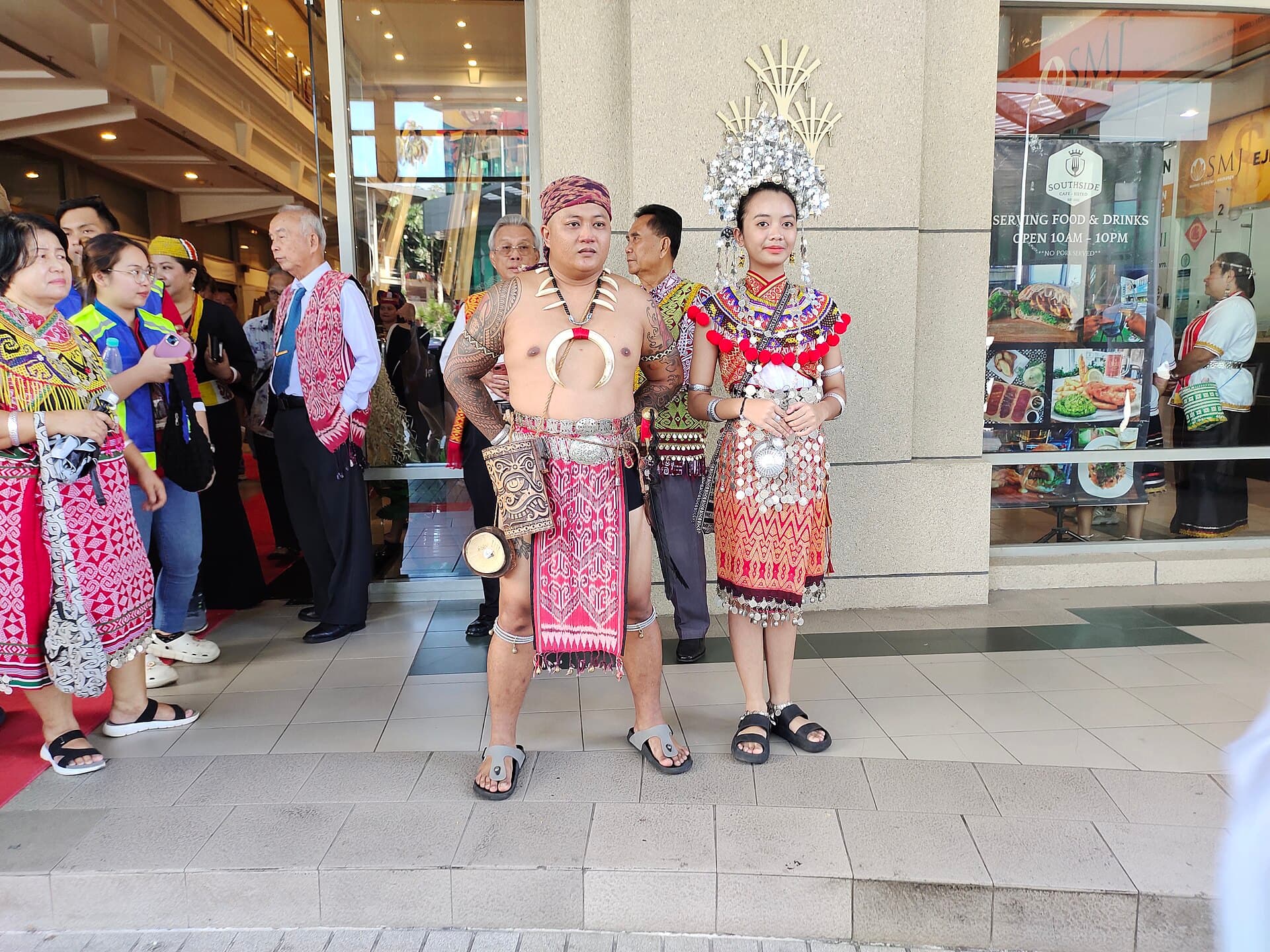
Gawai Dayak celebration in Kuching, 2024
Zahirulnukman · CC BY-SA 4.0 ↗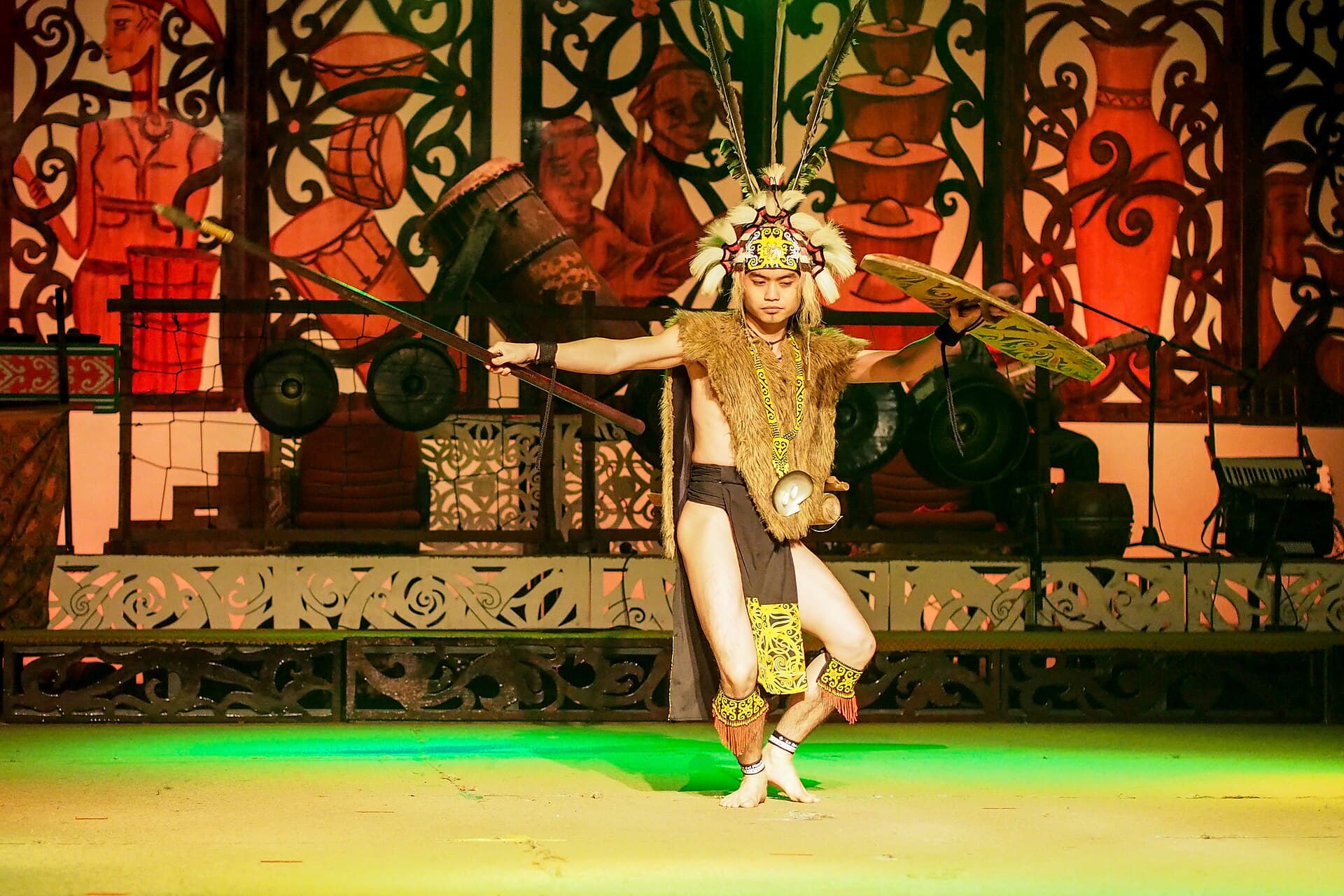
Ngajat movement and ceremonial dress
John Ragai from Petaling Jaya, Malaysia · CC BY 2.0 ↗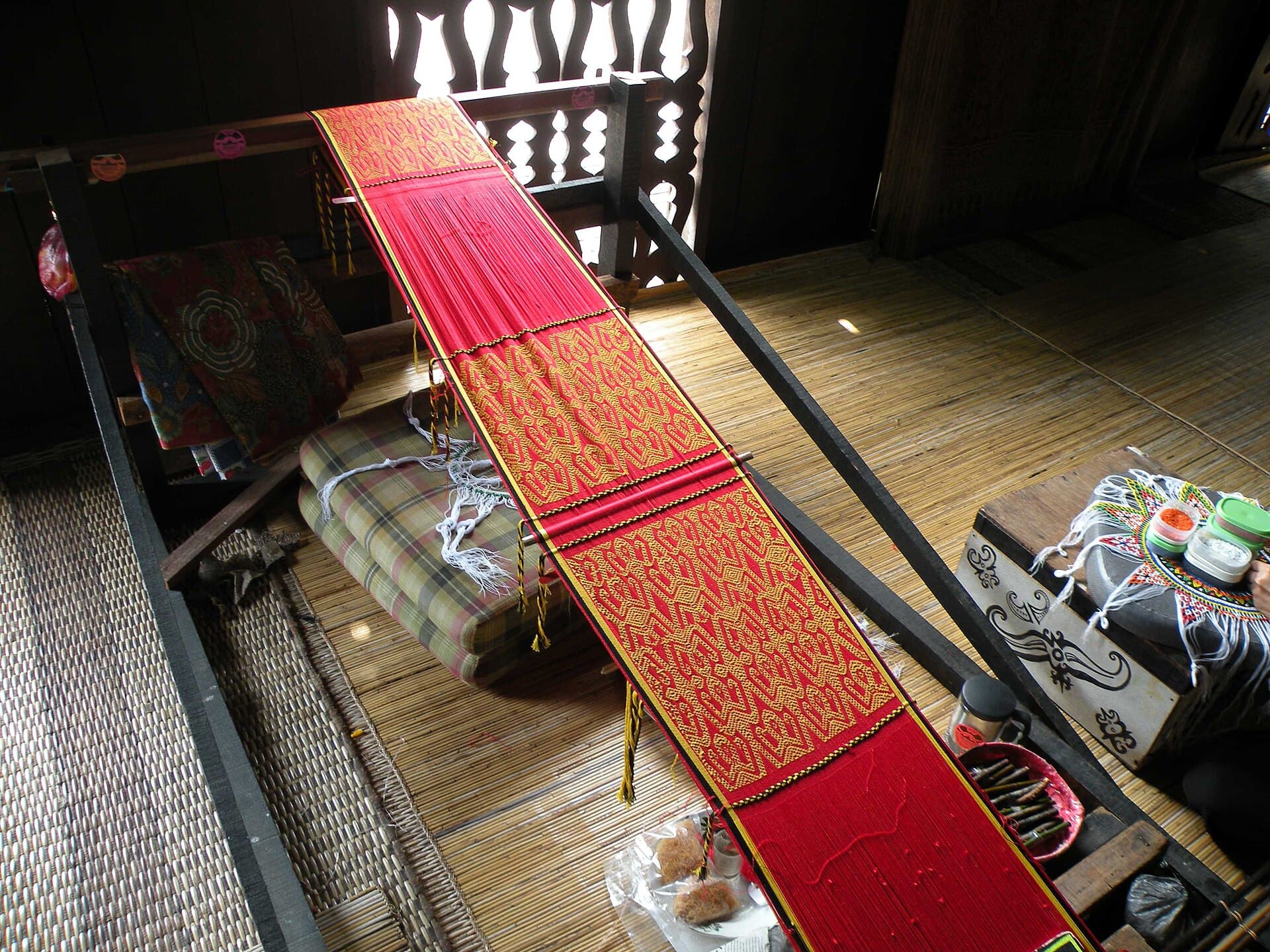
Pua kumbu, central to Iban material culture
BarbicanMan · CC BY 2.0 ↗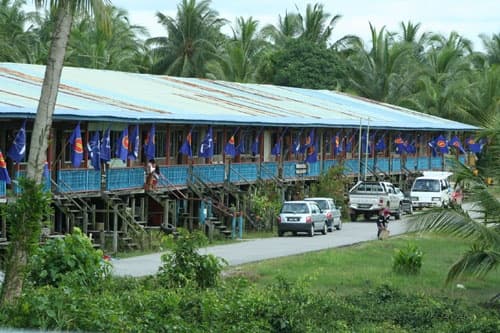
An Iban longhouse setting in Sarawak
Calvinaj (talk) · CC BY 3.0 ↗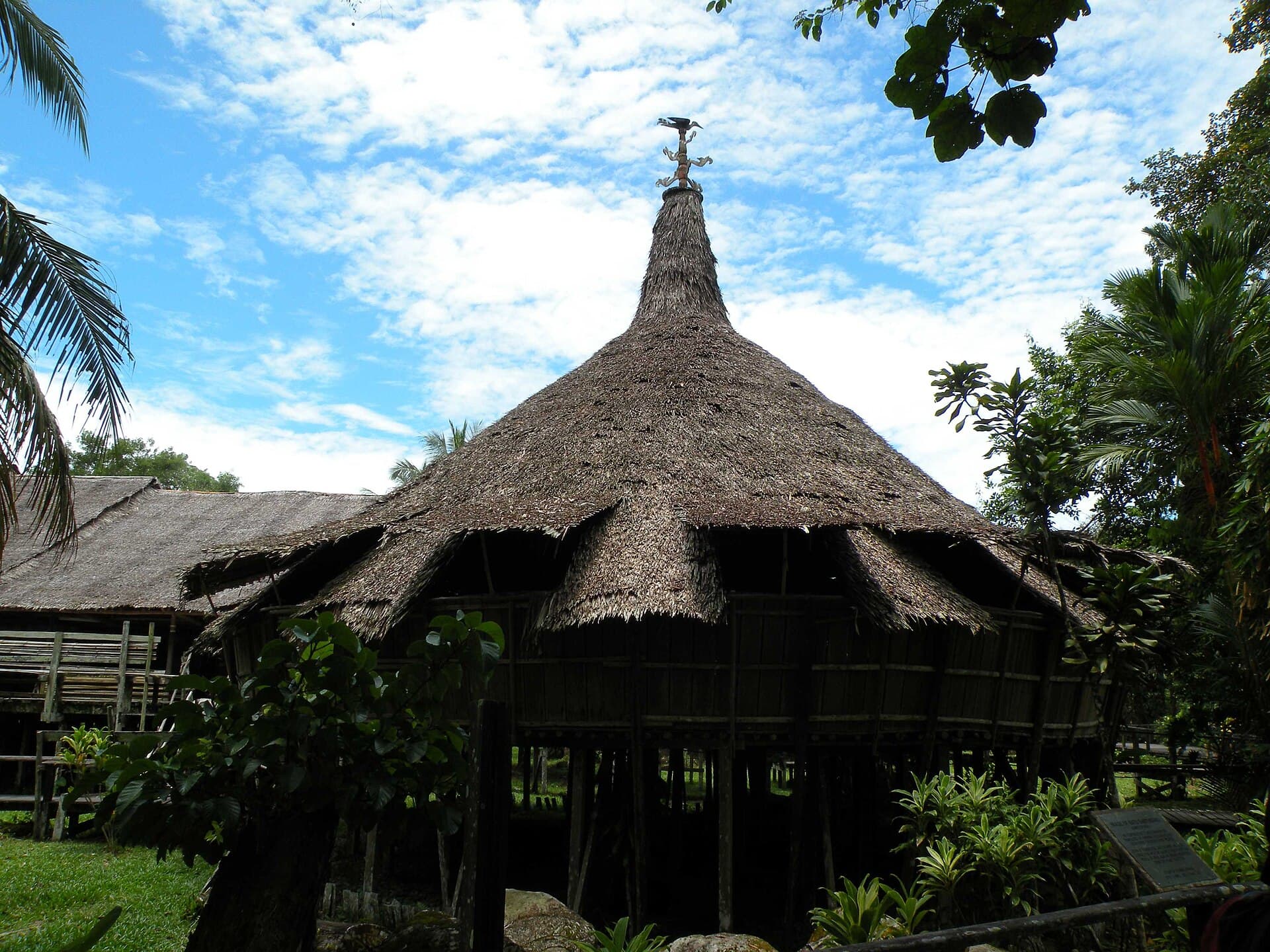
A Bidayuh baruk and village setting
Barbican Man from Kuala Lumpur, Malaysia. · CC BY 2.0 ↗More moments to be part of.
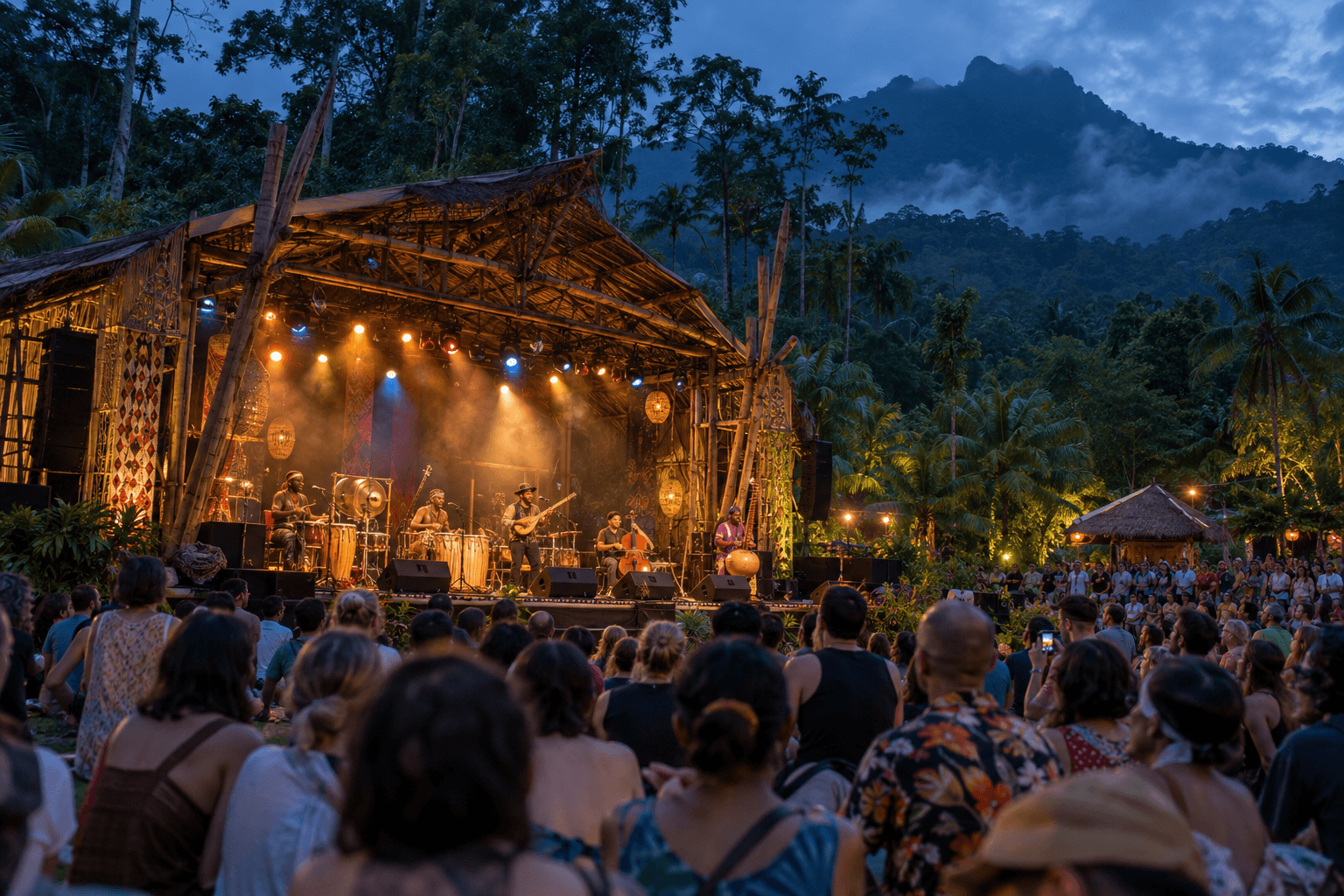 Music
Rainforest World Music Festival
Sarawak Cultural Village, Damai
A meeting of musical traditions, with the rainforest foothills of Santubong as its setting.
Explore the festival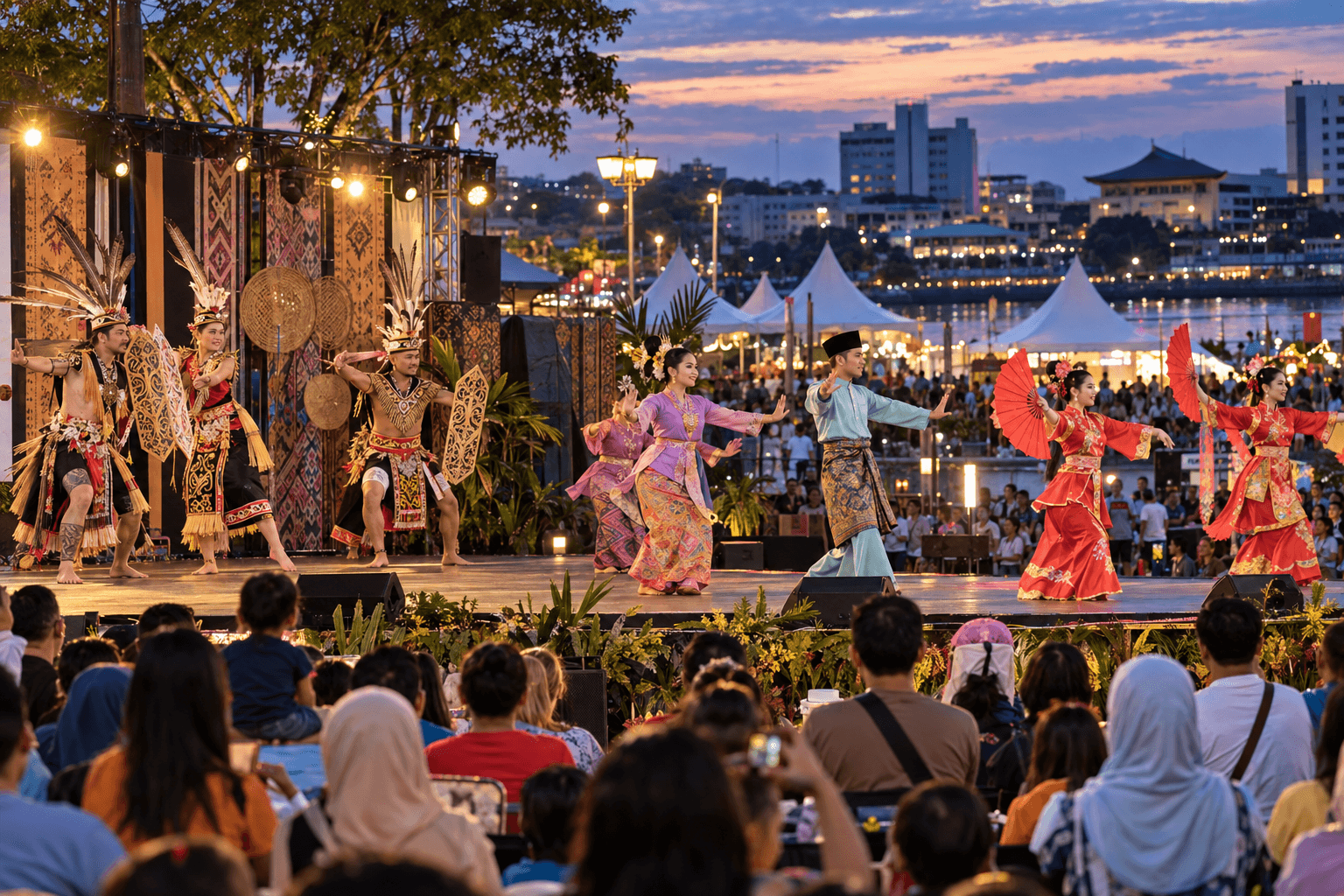 Culture
Borneo Cultural Festival
Sibu Town Square, Sibu
Discover Sibu through an evening of shared traditions, cultural performances and community spirit.
Explore the festival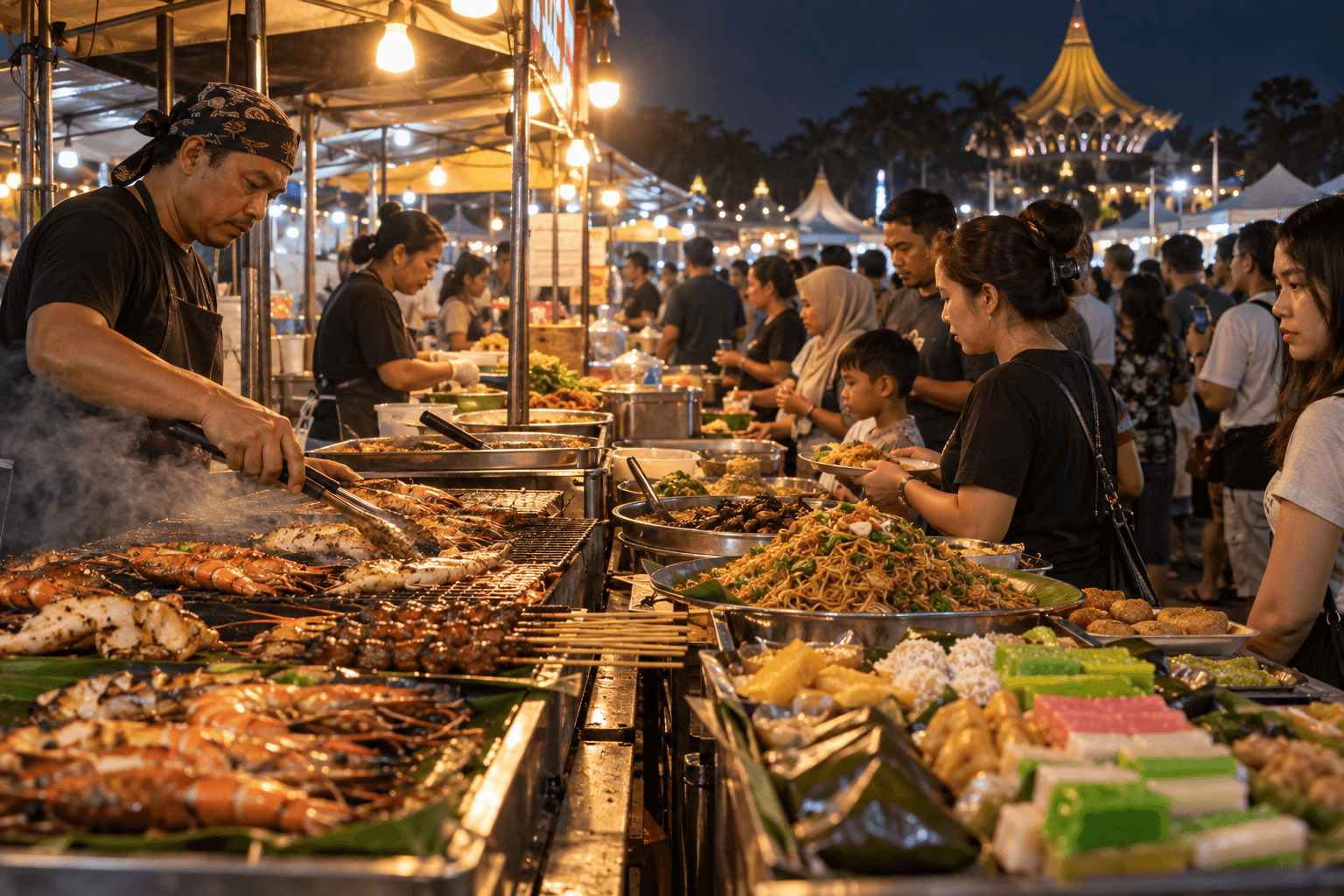 Food
Kuching Festival
MBKS grounds, Kuching
An invitation to eat, explore and enjoy Kuching’s appetite for a good community celebration.
Explore the festival