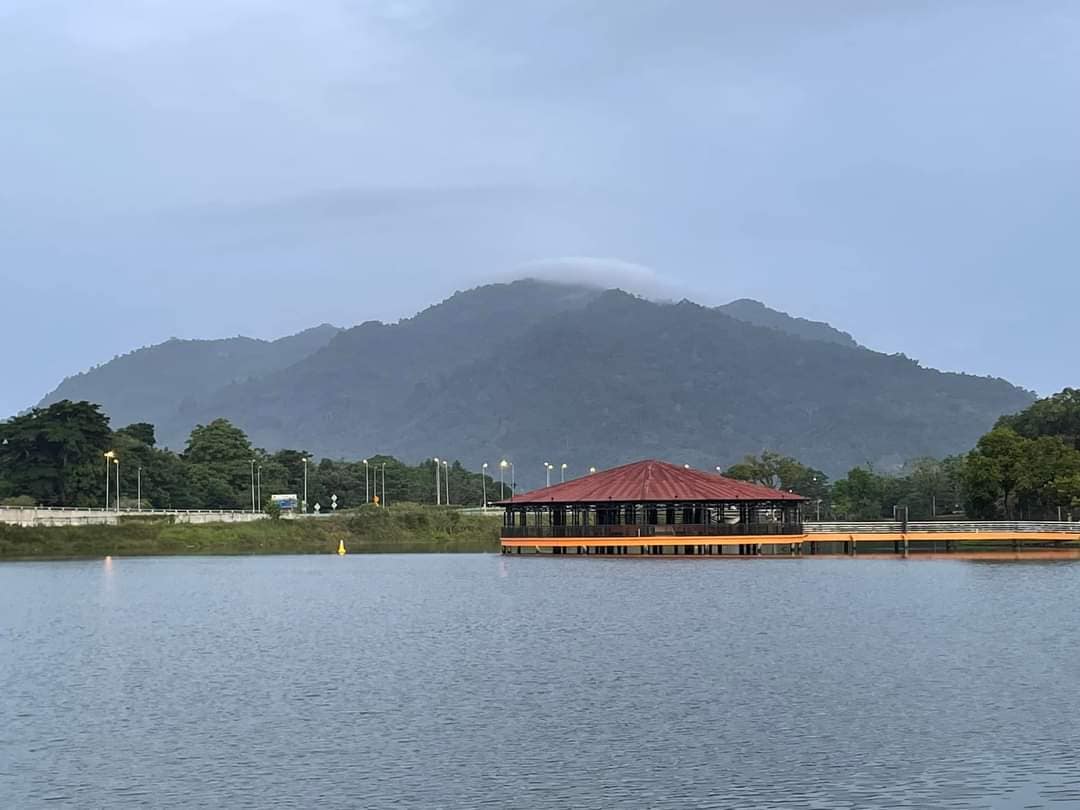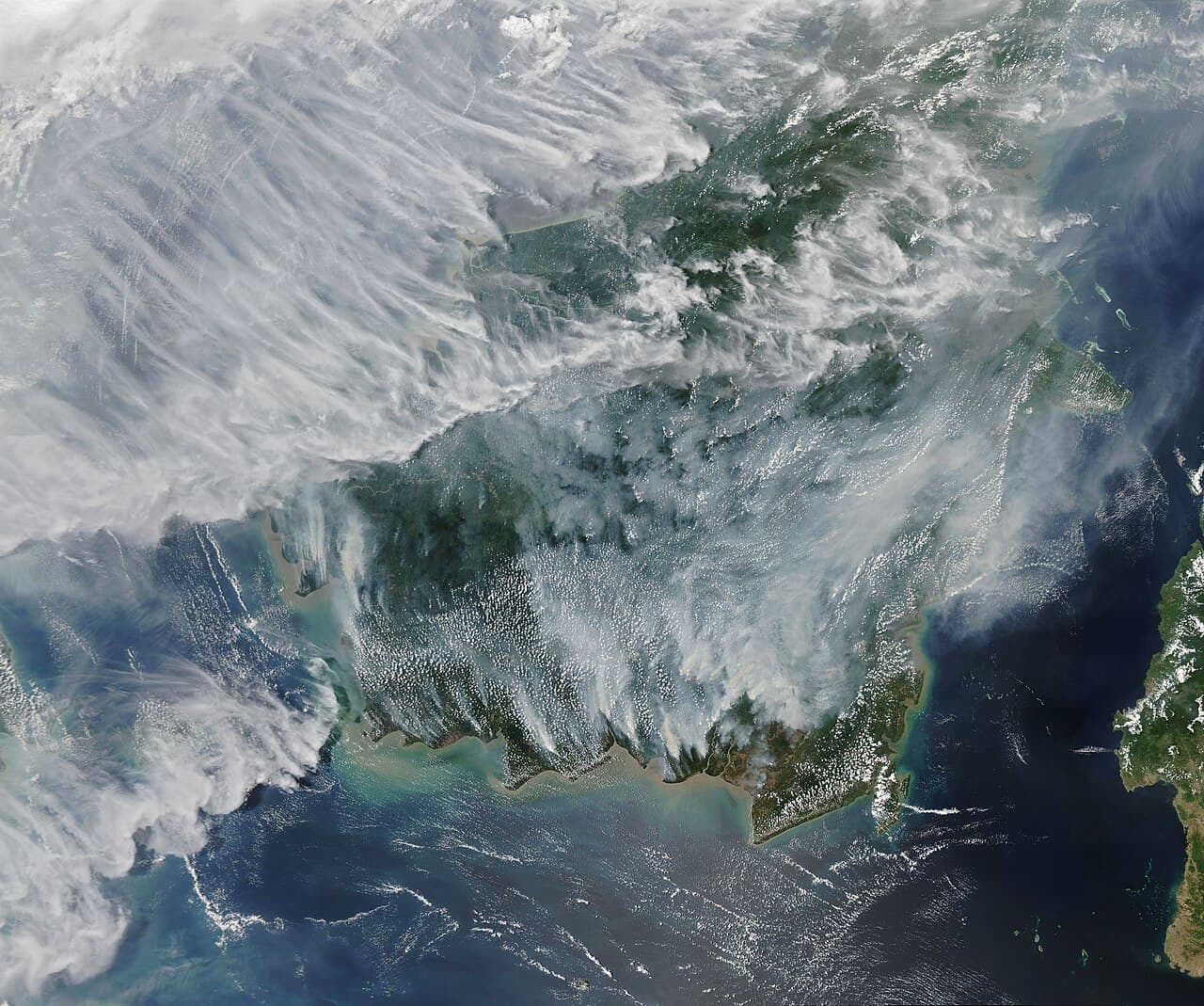
For most of August 2026, Sarawak has been living under a sky the colour of dishwater. The far bank of the Sarawak River vanished from the Kuching Waterfront. Mount Santubong, normally the horizon line from half the city, simply stopped being there. Flights ran late, playing fields emptied, and hundreds of thousands of schoolchildren were sent home. This is the state's worst smoke haze episode in several years, and almost none of what you have been breathing was set alight in Sarawak.
This article sets out what the readings actually showed, where the smoke came from, and what has been done about it. If what you want is the practical side — masks, windows, who is most at risk, whether to change travel plans — that is in our companion piece, Haze in Sarawak: a practical guide to getting through it.
What the readings showed
Malaysia measures air quality with the Air Pollutant Index, the API, published station by station and hour by hour by the Department of Environment. It runs on the same 0-to-500 scale most people half-remember from 2019: anything from 101 to 200 is unhealthy, 201 to 300 is very unhealthy, and 301 to 500 is hazardous. Below 51 is good, and 51 to 100 is moderate.
Sarawak spent most of the month in the unhealthy band, and the worst of it sat in the south-west, closest to the Kalimantan border. These were the readings at 9am on 20 August 2026:
| Area | API | Band |
|---|---|---|
| Serian | 187 | Unhealthy |
| Kuching | 182 | Unhealthy |
| Sri Aman | 174 | Unhealthy |
| Samarahan | 165 | Unhealthy |
| Sarikei | 153 | Unhealthy |
| Sibu | 123 | Unhealthy |
The peak came earlier in the month. On 12 August the Serian station logged 195, the highest in the state, and the same day Tebedu — right on the Indonesian border — pushed past 200 into the very unhealthy band. On 11 August, Kuching was ranked the most polluted major city in the world on IQAir's live list. By the 13th, seven areas were unhealthy at once: Serian at 178, Samarahan 177, Kuching 174, Sri Aman 162, Sarikei 157, Mukah 152 and Sibu 151.
Rain gave the state a short reprieve. Heavy showers on 15 August pulled Kuching back to 163 by that evening and 132 by the 16th — then the wind turned and it came back. The pattern of the whole month has been that: a wet afternoon buys a day, and the smoke returns.
Where the smoke came from
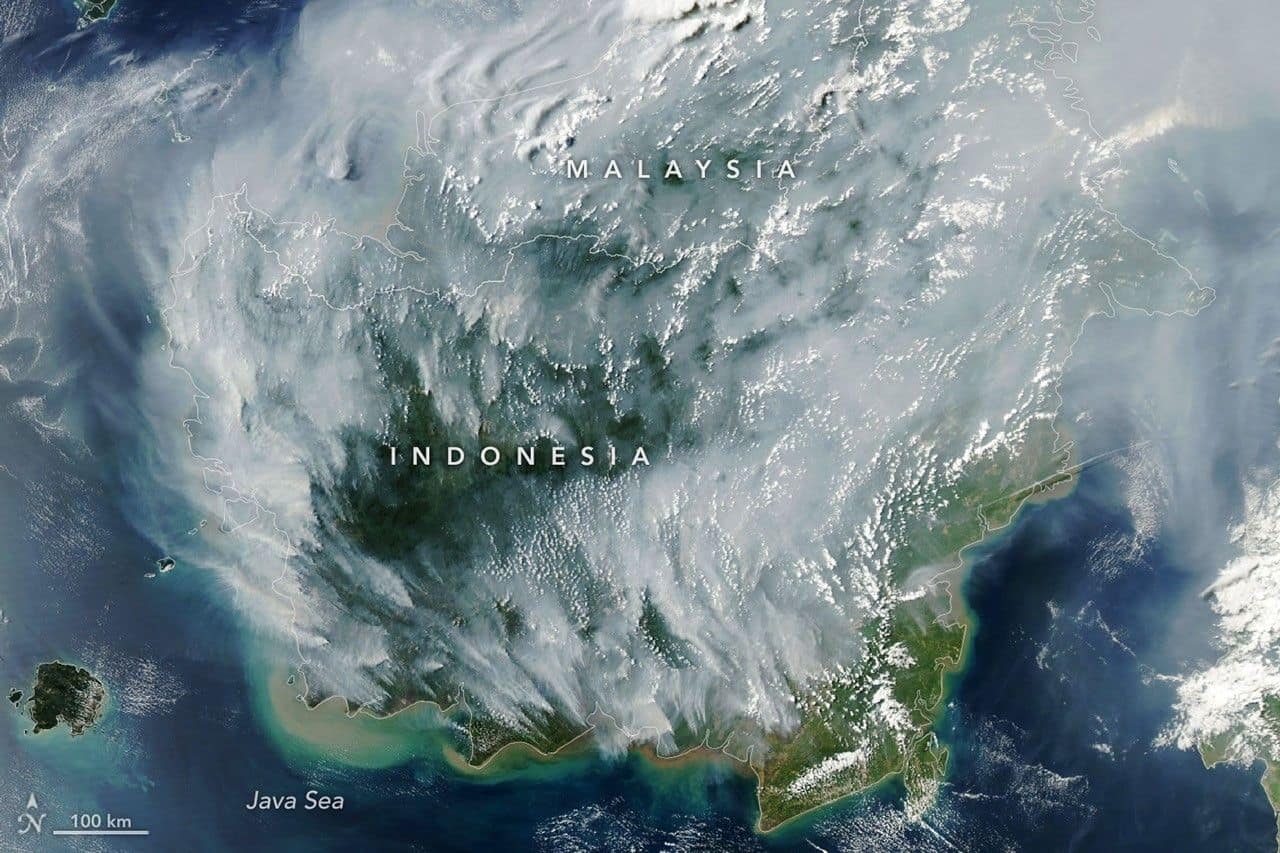
It came from Kalimantan, blown north on the southwest monsoon. The ASEAN Specialised Meteorological Centre counted 1,080 hotspots across Kalimantan on Tuesday 18 August alone, nearly double the 614 detected the day before, and satellite imagery through the month repeatedly showed moderate smoke plumes over West Kalimantan drifting northwards into western Sarawak.
Sarawak sits directly downwind. Between roughly May and September the southwest monsoon carries air up out of Sumatra and Kalimantan and across the South China Sea, and everything in it comes with. The state's own open burning adds to the load — every haze season brings enforcement notices about it — but the scale of what has been arriving is not something Sarawak generates.
Why 2026 has been worse than most years
Two things stacked up. The first is a very strong El Nino, which arrived in June 2026 and, on the forecasts, has an 81% chance of reaching "very strong" intensity by the October-to-December window. El Nino years dry Borneo out, and dry Borneo burns.
The second is peat. Large areas of Kalimantan's lowland are drained peatland, cut through with canals for oil palm and timber, and drained peat is essentially a deep bed of dry organic fuel. It catches easily, it burns downwards rather than outwards, it is very hard to put out, and it produces enormous volumes of fine particulate smoke. Fires are also set deliberately to clear land, which is why the season starts the way it does.
The numbers are the argument. By 9 August, close to 49,000 hectares had burned across Indonesia's six priority provinces, with West Kalimantan alone accounting for 28,680 of them — over half the national total, and the province immediately upwind of us. The NGO Madani Berkelanjutan put West Kalimantan's figure higher still, at 50,558 hectares. Satellite hotspot detections had passed 154,000 by 11 August, up around 60% in a month, and already well ahead of both 2019 and 2023 at the same point in their seasons.
What closed, and who felt it
Schools took the first hit. On 12 August, 108 schools across Serian division were ordered shut as the API there climbed above 200. By 20 August the closure had widened enormously: schools under the Sarawak Education Department in Kuching, Padawan, Bau, Lundu, Serian, Samarahan, Sri Aman, Lubok Antu and Simunjan were told to close through 21 August — 591 schools in total, covering 107,590 primary pupils and 89,733 secondary students. Home-based teaching, PdPR, was rolled out to keep lessons running.
Clinics and hospitals in Kuching, Kota Samarahan and Serian reported more patients arriving with breathing difficulty through the month, and pharmacies saw demand rise for masks and inhalers. Doctors quoted in the local press were most concerned about children, whose lungs are still developing, and about anyone already living with asthma, chronic lung disease or a heart condition.
The costs beyond health were quieter but real: outdoor trades — construction, farming, tourism — lost working days, small businesses lost trade, and sports fixtures and community events were called off across the affected divisions.
What is being done
The Sarawak Disaster Management Committee approved cloud seeding operations on 14 August, and Deputy Premier Datuk Amar Douglas Uggah confirmed they would go ahead — partly for the haze, and partly because hydropower reservoir levels had fallen low in the same dry spell. Cloud seeding needs suitable cloud to work with, so it is a tool for taking the edge off, not a switch.
On the ground, the lever is enforcement against open burning. Section 29A of the Environmental Quality Act 1974 carries penalties of up to RM1 million, up to five years' imprisonment, or both, with additional daily fines for a continuing offence — one of the stiffer environmental penalties on Malaysia's books.
The Ministry of Health's standing advice through the episode has been the simple one: once the API in your area goes above 100, cut back on physical activity and time spent outdoors, and take it more seriously the higher it climbs.
How long does this last
The honest answer is: until the rain arrives properly. The southwest monsoon runs through September, and officials warned as recently as 20 August that hotspot and smoke haze conditions may continue to escalate while the dry weather holds. Historically these episodes break when the monsoon transition brings sustained rainfall rather than isolated afternoon storms.
It is worth keeping some perspective on the scale, in both directions. September 2019 was considerably worse — Sri Aman's API hit hazardous levels and over a thousand Sarawak schools closed. 2026 has not reached that. But the underlying drivers, drained peat and a drying climate, have not changed, which is why this keeps happening.
Where to check the reading yourself
The official API, station by station, is published by the Department of Environment on APIMS. That is the number school closures are decided on, and it is the one to trust.
We also run a live haze watch covering ten Sarawak towns. It shows modelled fine-particle concentrations rather than the official API — useful for a quick sense of the trend between DOE updates, not a substitute for the real reading.
Reporting drawn from The Star, Malay Mail, DayakDaily, Sarawak Tribune and Mongabay. This is an independent information site, not a government or agency channel — for advisories that affect you directly, follow DOE, the Ministry of Health and the Sarawak Disaster Management Committee.