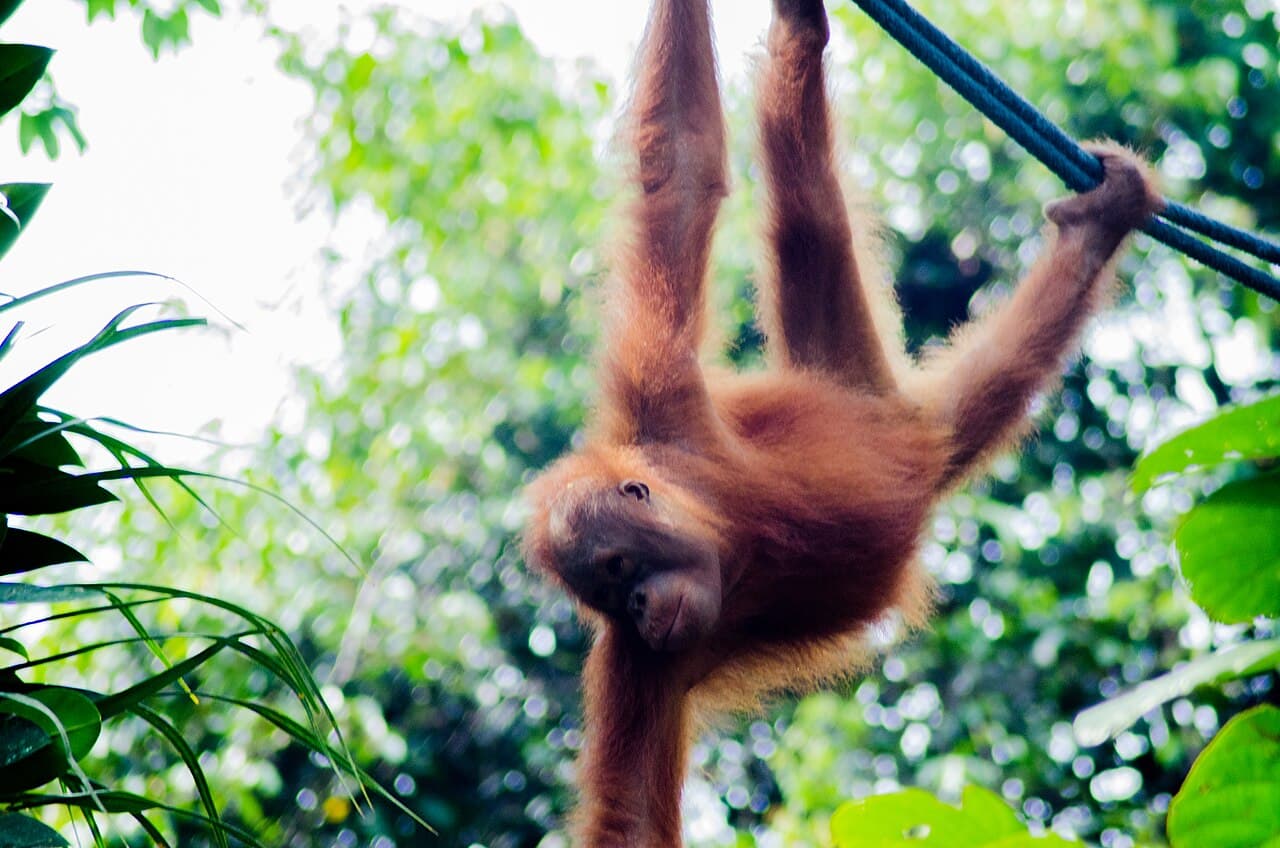
Semenggoh Wildlife Centre started in the 1970s as a rehabilitation station for orangutans that had been orphaned, injured, or kept illegally as pets. Rather than caging them, the centre lets its orangutans range freely through the surrounding forest reserve — which means sightings are never guaranteed, only ever a possibility, exactly as it should be with a wild ape.
Twice a day, keepers set out fruit at feeding platforms, and this is when most visitors get their view: a semi-wild orangutan swinging in from the canopy, unhurried, for a meal of bananas and jungle fruit. Some individuals show up daily; others, especially during fruiting season when the forest itself is generous, skip the platform for weeks at a time.
It's a gentler, more honest wildlife encounter than a zoo enclosure — there's no guarantee of a close-up photo, and that's exactly the point. Semenggoh's real achievement is a forest healthy enough that its orangutans don't need the free breakfast at all.
| Detail | |
|---|---|
| Morning session | Open 8am–10am, feeding at 9am |
| Afternoon session | Open 2pm–4pm, feeding at 3pm |
| Entrance fee | RM10 foreign adults, RM5 foreign children 6–17; Malaysians RM5 / RM2 |
| Arrive by | At least 30 minutes before a feeding session |
Semenggoh is the easiest wildlife stop from the city, and it slots into a day with Bako National Park and its proboscis monkeys. Anyone hoping to see orangutans in genuinely wild forest rather than at a feeding platform should look at Batang Ai, and our things to do in Sarawak page sets out the rest.

