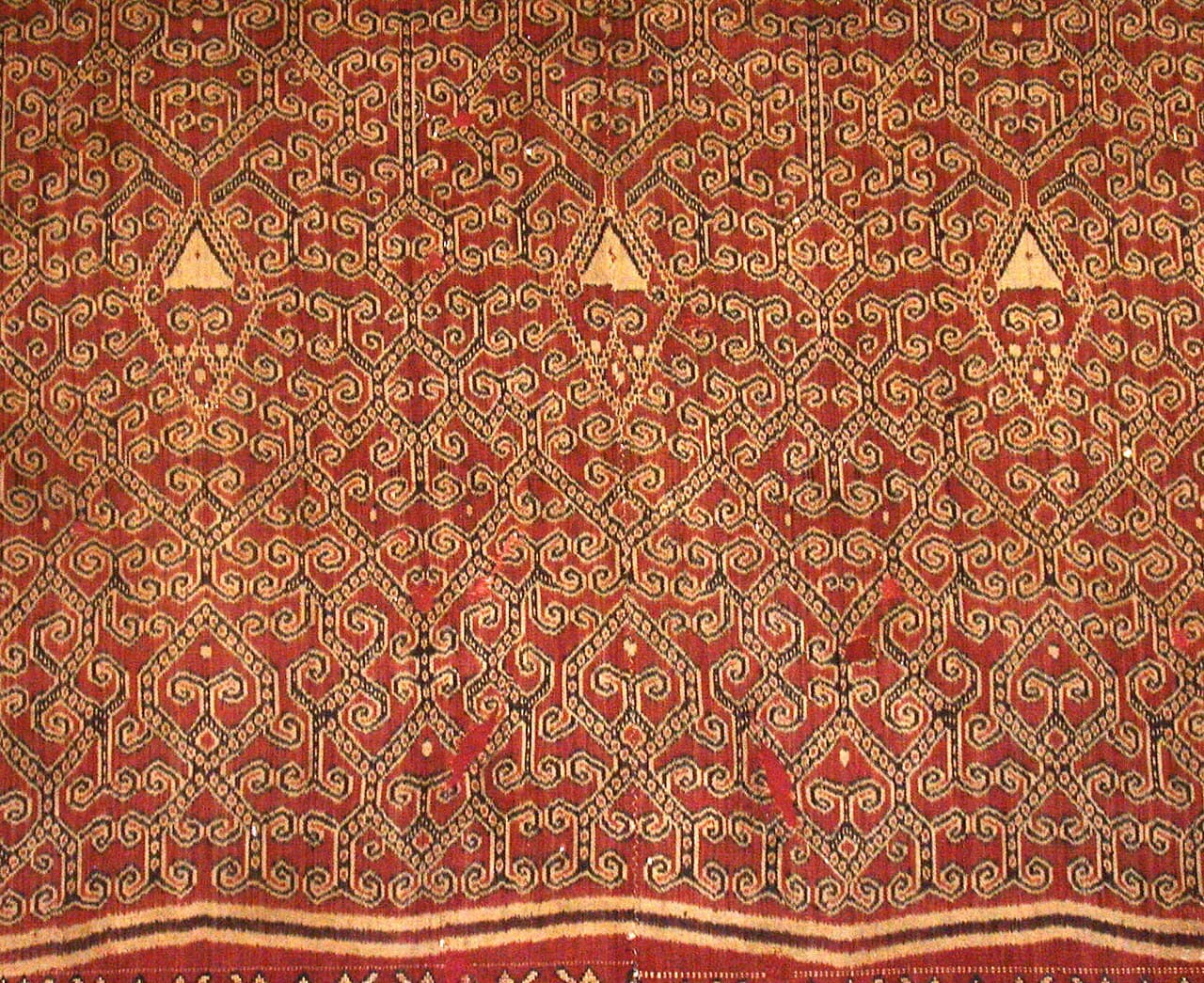
There is a phrase that follows pua kumbu everywhere it is written about: the cloth is dreamt before it is woven. It sounds like the kind of line invented for a museum label, but it describes something specific about how the Iban of Sarawak understand their ceremonial ikat textile. A pattern is not thought up. It arrives — in a dream, from the spirit world, to a weaver considered ready to receive it — and the weaving is the act of bringing it into the physical world. That belief is the reason a pua kumbu was never treated as decoration.
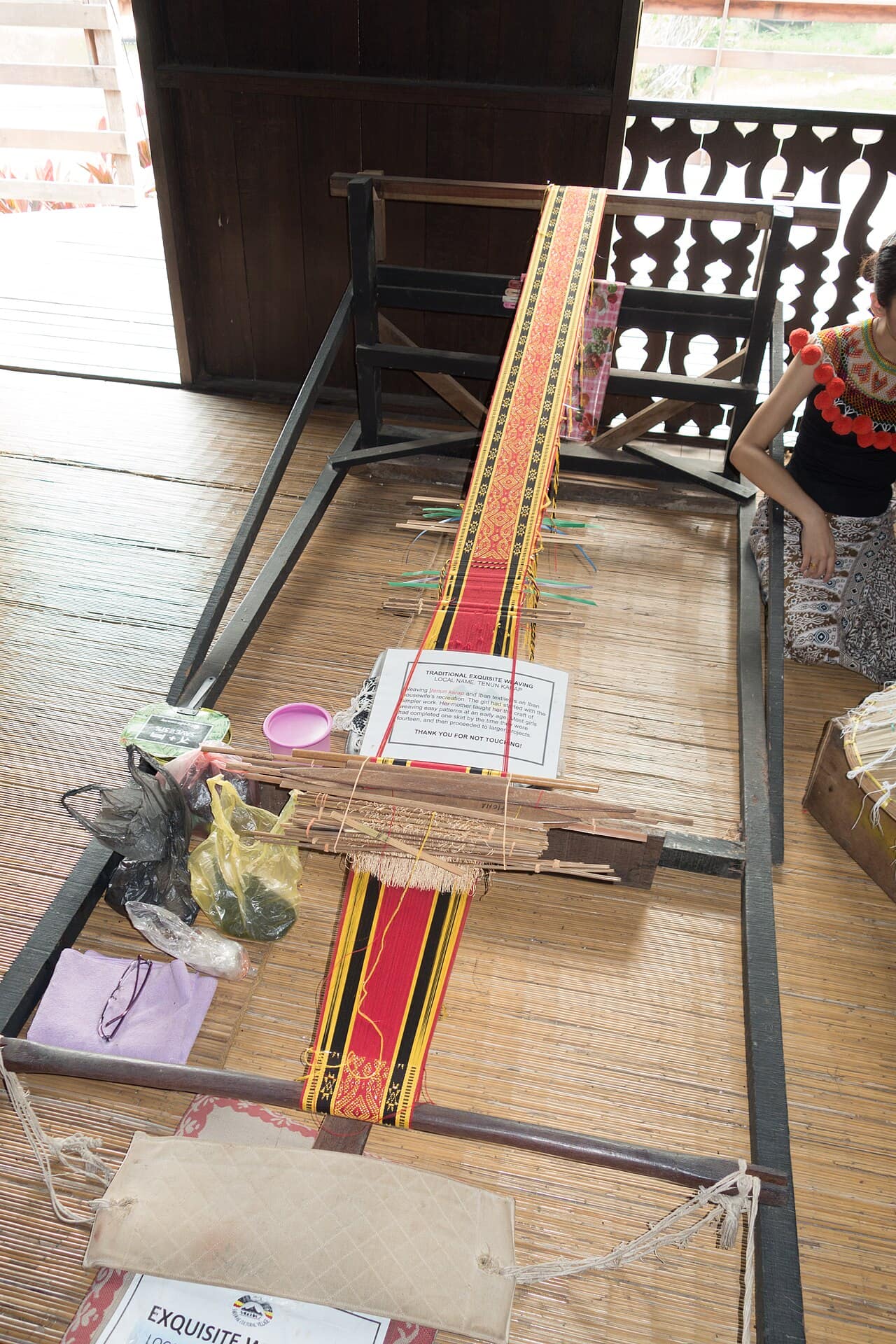
The technique itself is ikat, a resist-dye method used across maritime Southeast Asia, and understanding it explains why these cloths take so long. The warp threads are stretched on a frame and bound tightly with fibre in the places that must stay pale. The whole bundle is then dyed; the bound sections resist the colour. Untie, rebind somewhere else, dye again in a second colour, and repeat. By the time the threads reach the loom the entire design already exists in the yarn — the weaver is not drawing a picture, she is revealing one that is already there. Every slight shift of a thread softens an edge, which is why genuine ikat has that characteristic feathered blur that printed imitations never quite manage.
The dyeing was the part that carried real weight. The mordanting process known as ngar, which prepared the cotton to take the deep rust-red of the finished cloth, was conducted by senior women under specific taboos and blessings, and was spoken of in the language of warfare. Iban culture drew an explicit parallel: what headhunting was for men, weaving was for women — a dangerous undertaking with spiritual consequence, and the route to the highest status a person could hold in the longhouse. A weaver who had mastered the most powerful patterns was called indu takar, indu gaar, and she stood in the community roughly where a proven warrior stood.
That parallel was not metaphorical in the way it might sound. The most charged pua kumbu were the ones used to receive the trophies a war party brought home, and only a weaver with the standing to handle those motifs was permitted to make them. Attempting a pattern beyond your rank was understood to be genuinely hazardous — not a matter of poor craftsmanship but of exposure to something you had no protection against. Rank in the weaving hierarchy was earned pattern by pattern, and the whole system meant that a longhouse's cloths were a record of who its most accomplished women were.
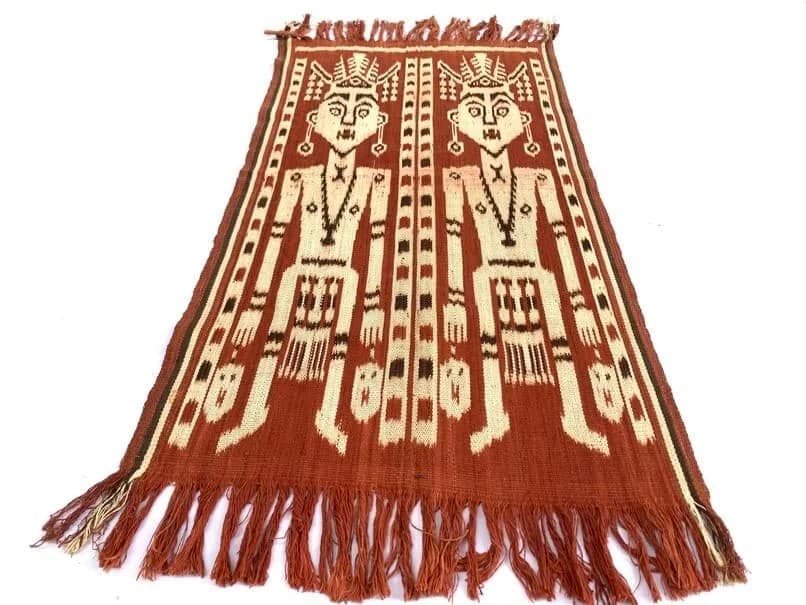
The motifs themselves work as a vocabulary rather than a picture book. Geometric forms in rust, indigo and undyed ecru stand for ancestors, spirits, crocodiles, human figures, plants and the shapes of the forest, and they are held within families and passed down. Two cloths that look superficially alike to a visitor can be saying quite different things to someone who grew up on the ruai. This is also why asking a weaver what a pattern “means” sometimes gets a careful answer: some knowledge is not general property.
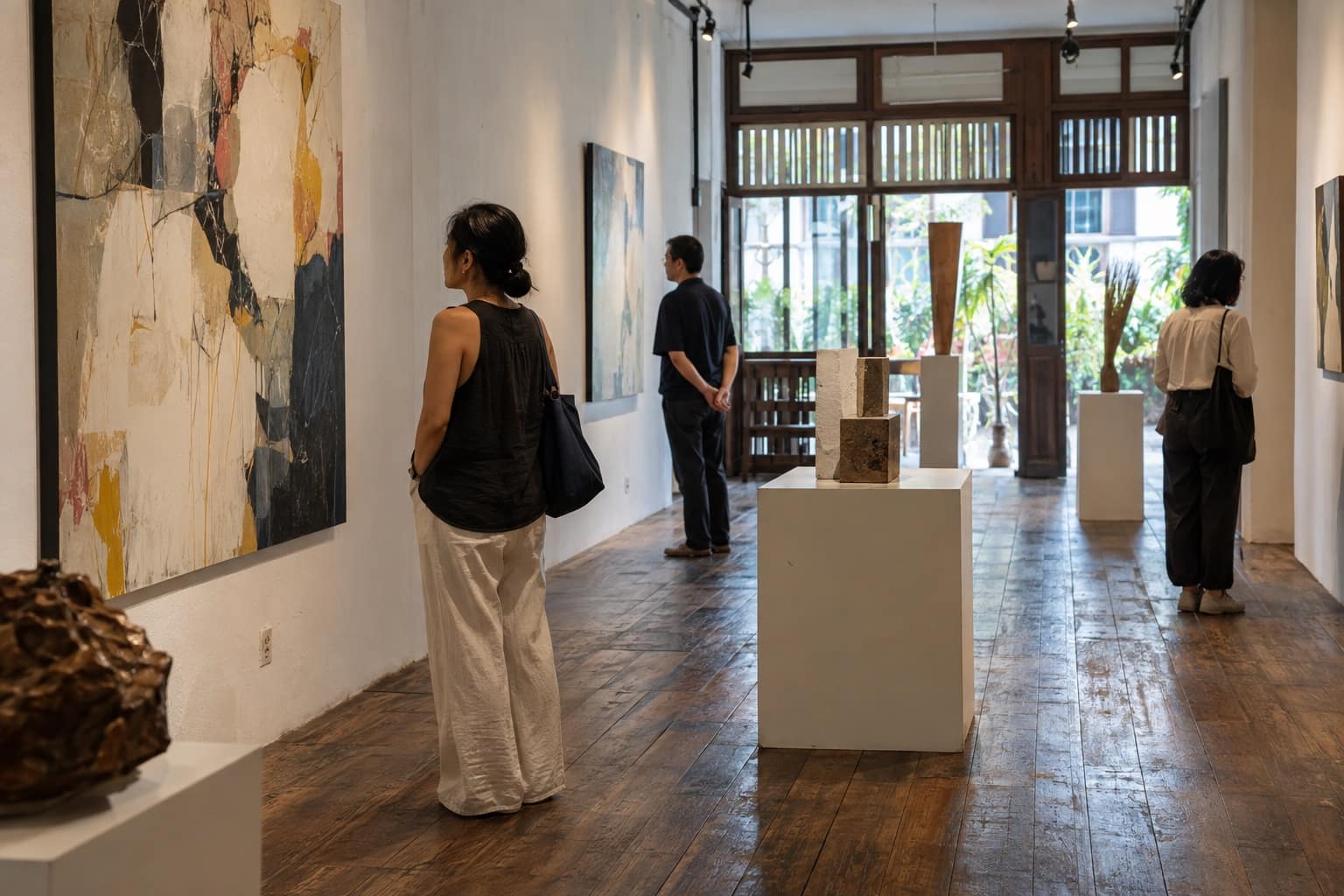
Pua kumbu is woven into the working life of a longhouse and appears at its thresholds — at births, at harvest rites, at the reception of guests, at the moments when the ordinary world and the spirit world are understood to be closest. On any ordinary day it is not on display. The textile you see hanging in a gallery has been taken out of that context, which is worth remembering when you are looking at one.
Today the cloth has outlasted a good deal of the ritual that surrounded it. Natural dyeing is far less common than chemical dyeing, the war-party context is gone, and a great many pua kumbu are now made for sale, framed as artwork, or produced on commission. None of that makes them fake — the technique is unchanged and still enormously labour-intensive, and a hand-woven piece can take months. It does mean that price and provenance vary wildly, and that not everything sold as pua kumbu is ikat at all — printed cloth is sold under the same name. The give-away is the edge of the pattern: printed cloth has a hard boundary, ikat has that soft feathering where the threads shifted.
The easiest place to see good examples is Kuching. The Borneo Cultures Museum holds textiles in its permanent galleries, and the Sarawak Cultural Village at Damai has weaving demonstrated in its Iban longhouse by people from the community it represents. To see cloth in the setting it belongs to, though, you need to be in a longhouse — most straightforwardly around Gawai on 1 June, when doors are open to anyone who walks up.
If you are heading that way, our first-timer’s guide to visiting an Iban longhouse covers the etiquette, and life inside an Iban longhouse explains the ruai, the bilik and how the building actually works. The wider context — the Bidayuh, the Melanau, the Brooke century — is gathered on our Sarawak heritage page.