A power line lying in the road after a storm is live until Sarawak Energy says it is not. The utility's advice is to stay at least 10 metres away from a fallen line or pole, to assume the equipment is still energised, and to report it on 1300 88 3111, which runs 24 hours, or through the SEB Cares app. Everything else a storm leaves behind — the tree across the lane, water in the wiring, a night away from the house — sits with a different agency. This is who owns what in Kuching.
The line on the ground is live until someone tells you otherwise
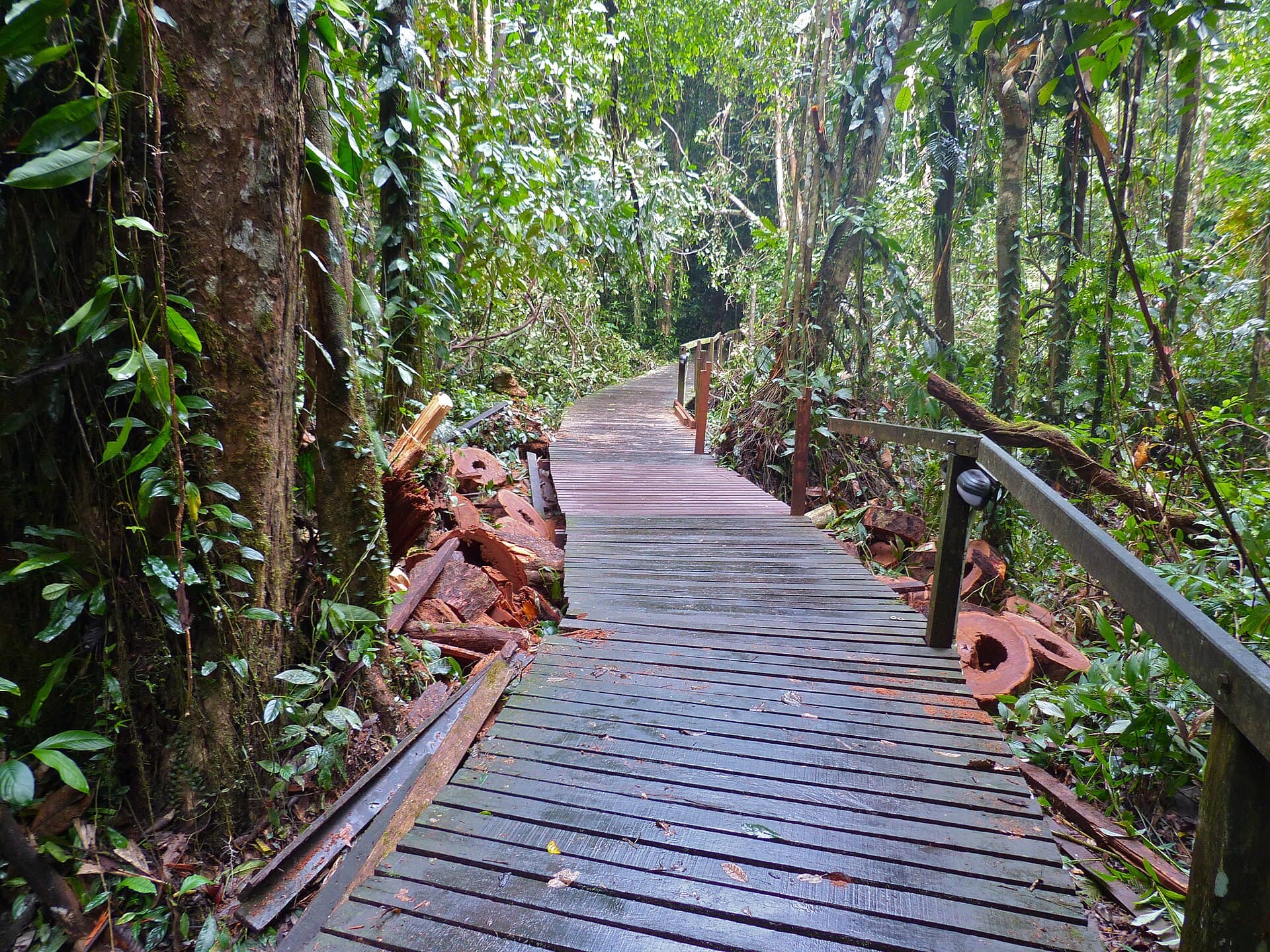
Sarawak Energy's storm safety advisory, issued on 18 May 2020, treats downed lines and fallen poles as ordinary storm damage rather than the exception. Its instruction is to assume fallen equipment is energised, keep clear, and neither touch it nor drive over it.
The advisory is also explicit that supply does not come back the moment the rain stops. Crews patrol the lines again before restoring supply, checking pole condition and clearing obstructions, and work waits until surrounding conditions are safe. Restoration takes longer in wet weather, and rural repairs have run into the following day. Yusri Safri, Sarawak Energy's Vice-President for Distribution, put it this way:
Safety is our top priority and this means ensuring that the surrounding conditions are safe before work can begin or continue.
If water reached the wiring
A separate Sarawak Energy release dated 2 November 2022 covers electrical hazards in wet weather. As water begins to rise, turn the supply off at the main switchboard and move electrical equipment above the level the water is expected to reach. Do not operate an appliance that has been submerged, and keep away from submerged poles, substations and transformers.
Reconnection is not a household job: the release states that a qualified electrician registered with Syarikat SESCO Bhd should inspect the wiring before supply goes back on. Alongside the 1300 88 3111 line, it points to the CARINA virtual agent on the Sarawak Energy website and the SEB Cares app.
Which council picks up the tree, and when
Kuching is run by two city councils, and the difference matters at two in the morning. In the north, Dewan Bandaraya Kuching Utara operates a 24-hour service centre handled by its Public Relations Division, taking feedback and complaints on 082-446644. DBKU also applies what it calls a no wrong door policy, meaning it will accept a complaint that properly belongs to another government agency. The page does not itemise which categories the centre handles.
In the south, Majlis Bandaraya Kuching Selatan lists a general line on 082-354200 and an email address, request@mbks.gov.my, at its Jalan Padungan office, open Monday to Thursday, 8am to 1pm and 2pm to 5pm, and Friday, 8am to 11.45am and 2.15pm to 5pm. No equivalent round-the-clock hotline is published on that page, so an overnight report in Kuching South has no equivalent advertised route.
What MetMalaysia's warnings actually cover
MetMalaysia issues a thunderstorm warning when rainfall intensity above 20 millimetres an hour is occurring or expected, judged from station observations, radar, satellite imagery and model output. Each issuance is valid for no more than six hours; if the weather is expected to persist beyond that, it is escalated into the continuous-rain category. The department describes thunderstorms as usually accompanied by strong winds, but only rainfall intensity is a trigger.
The department does publish wind categories, but they are marine rather than domestic. Its strong wind and rough sea warnings run in three bands:
- Category One — winds of 40 to 50 km/h and waves up to 3.5 metres, affecting small boats and marine recreation.
- Category Two — winds of 50 to 60 km/h and waves up to 4.5 metres, affecting shipping, including fishing and ferry services, and coastal activity.
- Category Three — winds above 60 km/h and waves above 4.5 metres, affecting all shipping, offshore platform crews and coastal activity.
Both go out through myCuaca, eMET, SMS, the department's website, the media and social platforms.
Who opens the evacuation centre
Shelter is the Social Welfare Department's responsibility. Jabatan Kebajikan Masyarakat Sarawak sets out its disaster role in three phases on a page last updated on 21 July 2026:
- Before — mapping areas at risk, identifying the buildings that will serve as temporary evacuation centres, appointing committees to run them, stockpiling food and supplies, holding simulation exercises and setting up communications.
- During — opening and closing the centres, registering those who arrive, distributing food and relief goods, running crisis intervention and psychological support, and managing volunteers.
- After — recovery assistance, community clean-up programmes, services for vulnerable groups, continued psychological support and a post-event review.
Its stated duties cover assistance both to people at the centres and to those who stayed in the affected area.
What a household is actually given
The rates are public. In an item published on 14 May 2026, the Deputy Minister of Community Wellbeing Development, Datuk Mohammad Razi Sitam, put the rate at a temporary evacuation centre at RM50 per person a day, with dry food assistance limited to RM100 per person a week.
The utility owns the line, the council owns the tree, the welfare department owns the shelter and the food, and the forecaster owns the warning that precedes all three.
Sources
- Sarawak Energy Safety Advisory For Stormy Weather - Sarawak Energy — Sarawak Energy
- Sarawak Energy Advice on Staying Safe from Electrical Hazards Over The Rainy Season - Sarawak Energy — Sarawak Energy
- The Official Website of the Commission Of The City Of Kuching North — Sarawak Government
- Official Website of Council of the City of Kuching South — Sarawak Government
- METMalaysia - Kriteria Amaran Ribut Petir — MetMalaysia
- METMalaysia - Kriteria Amaran Angin Kencang dan Laut Bergelora — MetMalaysia
- Pengurusan Bantuan Bencana - Jabatan Kebajikan Masyarakat Sarawak — Sarawak Government
- Berita - UKAS — Sarawak Government